[CNBCfix Halftime Report/Fast Money Review Archive — May 2025]
Note to Judge — this is the same stuff Jamie talks about all the time
From the beginning of Friday's (5/30) Halftime Report, Judge kept promising Morgan Brennan's live interview with permabear Jamie Dimon at the Reagan library in California.
And, unlike sometimes happens with these events, the interview got going fairly quickly, shortly after Judge said it would, just after nearly all panelists (except for Kevin Simpson) were given a shot at an opening market commentary.
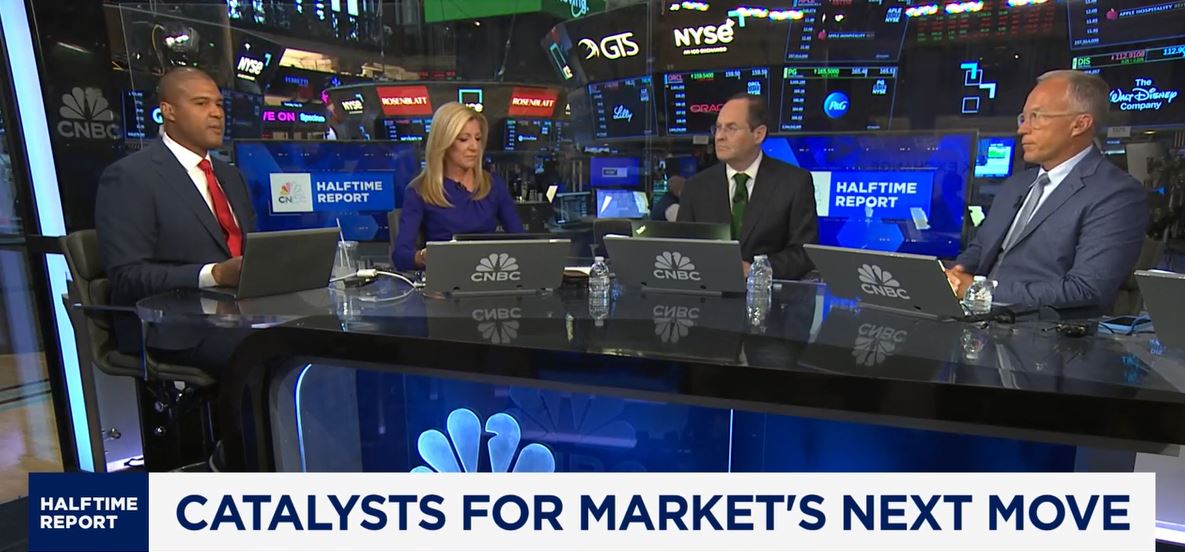
Morgan hardly had to do any talking. Jamie started off noting debt and went on to say we basically have to "fix" everything ... permitting, regulations, immigration, taxation, inner-city schools, health care system, Pittsburgh Steelers quarterback situation: "We're not a team anymore."
Jamie said we should "Keep the Western military alliances together." Jamie said of trade negotiations, "They'll be agreements in principle. They will not be trade agreements." But they would provide a "framework ... to get things done."
Jamie sort of scoffed at stockpiling bitcoin and said we should stockpile "bullets" instead.
Jamie actually said "bulls---," as a verb, during his remarks.
After it was over, Judge restarted Halftime and said Jamie was "animated" and "always entertaining," but even Judge wasn't sure Jamie has ever been "this provocative on this many topics." Sorry Judge, we (and you) have heard it all before. (Jamie didn't actually bring up PANW's percentage of billings that come from the federal government.) (Let's hope Jamie thinks it's 5 and not 50-60.)
Jim Lebenthal said markets "sold off during the speech." Jim said "there was an apocalyptic (snicker) tone there."
Kevin Simpson took a "slew of notes" about Jamie's remarks.
Judge asked Josh Brown if the market is "ignoring" the risks mentioned "front and center" by Jamie Dimon. Josh said we're not ignoring risks, that they're "coming to fruition," but they're showing up in less important stocks. Josh pointed out how BBY got "hit hard" because it's having tariff issues, and GAP stock got "blown up, it's down 20%."
Stephanie Link interrupted Brown; "Stop, wait a minute ... Josh- Josh, the stock was up 55% from the April lows. ... The turnaround is for real ... I own it ..."
Josh insisted "I don't care" and that his point is (in reference to Judge's question), how can these stocks be falling like this if the market is somehow "ignoring" risks. (Because Stephanie can't stand the thought of anyone noticing GAP being down.)
Stephanie observed of Jamie Dimon, "He was not as negative 2 weeks ago." (#differentthingsfordifferentaudiences)
Kevin and Judge noted during Final Trades that Jamie told Morgan he'd entertain public service "If I thought I could really win." Jamie is asked this question by business media all the time. Why does the business media care. Has he indicated he wants to be a politician? When is he actually going to run for office ... when he's 110 years old?
We think Judge jumped to The Exchange a few seconds too soon, as Kelly seemed unprepared and the camera flashed between Judge and Kelly looking at notes and adjusting earpieces.
Rest of the year ‘will be OK’
In the non-Jamie-Dimon portions (that's the very beginning and part of the end) of Friday's (5/30) Halftime Report, Stephanie Link said of the stock market, "I think we could be sideways for a little while ... but I think it would be short-lived."
Stephanie said the economy is "chugging along."
Josh Brown said the Mag 7 is the "most interesting place" in the market. "They're now 8% below all-time highs," Josh said.
Josh said we got a "Goldilocks, uh, inflation number this morning."
Jim Lebenthal bluntly said "the tariff bark hasn't shown up."
Late in the show, Judge discussed his chat with Dan Loeb. Except the hook of Judge's remarks was that Third Point just turned 30, and Judge wasted some of the limited time at the end of the show reciting Third Point's résumé and touting how great Dan is thought to be. According to Judge, Dan thinks the rest of the year "will be OK" (Zzzzzzzzzz) (snicker) (if Dan did NOT think so, that would've led the program) and that Third Point ... incredibly ... owns some Mag 7 stocks. Judge said Loeb said he bought "bank debt" in X/Twitter. (But apparently Loeb didn't take a stake in PANW based on whether it's 5% or 50-60% of billings that come from the government.)
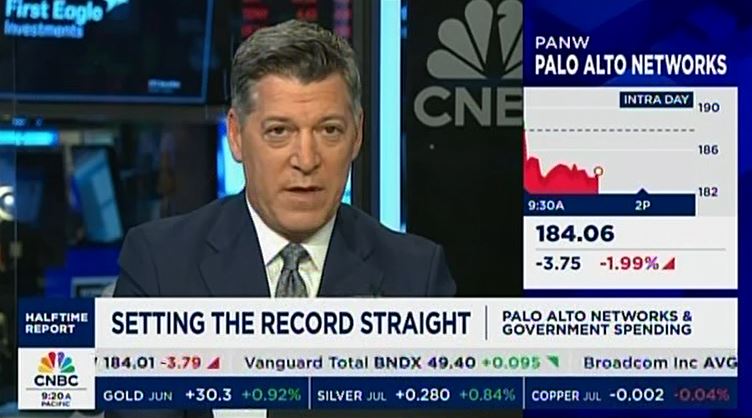
Judge says PANW CEO ‘refuted’ panelist’s argument — and ‘I think we had some issues with what Malcolm had to say’
On Thursday's (5/29) Halftime Report, Judge had a correction to air. And first, he let a CEO do the honors.
Judge was referring to Halftime panelist Malcolm Ethridge's comment a day earlier that for PANW, "50 to 60% of their revenues comes from the federal sector," a point made by Ethridge while explaining why he sold and doesn't like the stock.
(In hindsight, that does seem awfully high.) (But this page didn't think to question it a day ago.)
Ethridge also bluntly stated in his debate with Stephanie Link, "Palo Alto Networks needs the U.S. government."
Anyway, on Thursday, Judge said PANW CEO Nikesh Arora actually "refuted Malcolm's key claim in a post last night on LinkedIn."
OK. Terminology there is a big deal. Because many people misuse "refute." Including CNBCers. More commonly, something is only "rebutted." But given what Judge went on to say, it sounds like CNBC believes "refute" is in fact the correct term here.
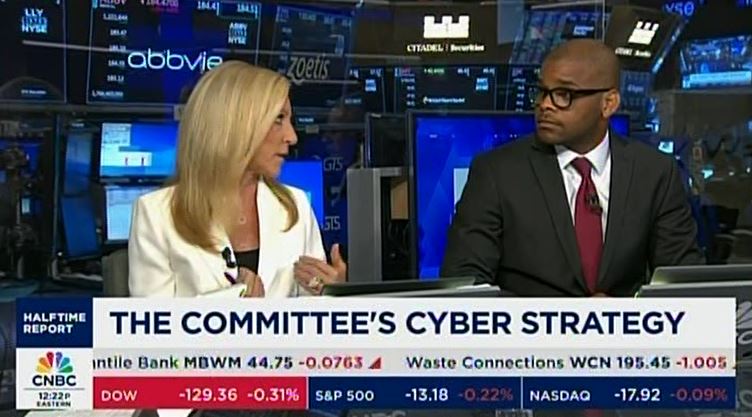
Judge showed a graphic of Arora's rebuttal. Of the 4 points listed on screen, the first one — 5% of billings are from the government — is the only one that really matters.
Judge then spoke to the camera and indicated that not just Arora, but CNBC, had a problem with Ehtridge's comments a day earlier:
"Here's the key point to be made, and where I think we had some issues with what Malcolm had to say. 50% of government spending on cyber goes to Palo Alto. (That too seems a high number, but this page is not going to investigate it.) 50% of what the government spends on cyber goes to Palo Alto. NOT that Palo Alto itself relies on the government for 50 to 60% of its billings. What percentage of Palo Alto's total billings come from government? In Q3, the company reported single digits, and you saw what Nikesh Arora himself said in his own words, was 5%. Um, yes, there have been concerns about slowdowns in billings (sounded like 'buildings') in prior quarters, including from the government. Uh, but the numbers were way off. And, the facts matter. They matter to you. Matter to us. Matter to the companies we talk about. I wanted to get that cleared up."
OK. Hmmmm ... Normally in situations such as these, the panelist dials in the next day and says "Sorry, I misspoke." Or possibly, the panelist may dial in to explain why they think they were corerct. Ethridge, who has only made a handful of Halftime appearances but has been a semi-regular on Closing Bell for years, did not appear on Thursday's show.
Either he meant to say, "They get 50-60% of all government cyberspending." Or he meant to say exactly what he did say.
Of course we don't know, but given how emphatic he was in his reasoning, we have to think it's more likely the latter than the former.
Which then begs the question — if a Certified Financial Planner (according to his web page at CNBC.com) is selling a stock and expressing deep skepticism about it on television because he thinks the company gets 50% of its revenue from the federal government when it really only gets 5% according to its company report ... what kind of research is he actually doing?
On Thursday, after Judge's statement, Bryn Talkington said of the PANW debate, "Steph won on that one." Except Stephanie didn't argue that Malcolm's numbers were wrong — she argued that the government won't cut cybersecurity spending. On that point, Ethridge may still be correct. This page will say that any company's government contract during this administration probably shouldn't be regarded as iron-clad.
Bryn on Thursday said to just "buy the basket" in cybersecurity. Josh Brown said ZS looks "phenomenal" and added that he owns CRWD, which he said made a record high on Wednesday. (This writer is long CRWD.)
Ethridge does not appear on CNBC.com's Halftime Report "Investment Committee" portal, which lists the current holdings of panelists. He does appear on the CNBC.com page of CNBC Contributors, which includes most Halftime Report and Fast Money panelists.
On Wednesday, Malcolm had told Stephanie, "I wish I had called you before I sold my shares. You might've paid a premium for 'em." He would've been better off calling up the company's quarterly report.
At the end of Wednesday's PANW debate, Judge said, "All right, we'll leave it there. Little spicy, which we like."
Jensen read a script
Judge opened Thursday's (5/29) Halftime Report declaring the trade court ruling on tariffs is only "far, far from the end of it," so "we're gonna focus on Nvidia." (Which made us wonder whether anyone wants to buy CLF instead of NVDA.)
Josh Brown said NVDA's in a "really singular position" with a "not crazy" multiple. "Obviously, the growth rate is decelerating," Josh conceded. All that said, "This company is just absolutely on fire," Josh said.
Bryn Talkington said the options market seemed to get the NVDA move right, and to get past all-time highs, we'll need "clarity around China." However, when it comes to Jensen, "I think this is the first call I've ever heard him read a script, first of all. Very, I mean- he didn't have one extemporaneous word. It was all very scripted out."
"Is that a problem?" Judge asked Bryn. "You're not the only one who's mentioned that," adding that an analyst thought it was "closer to an Apple call."
Bryn said "it would matter" if it becomes a "consistent" feature of the earnings call. Bryn said Jensen "obviously owes a debt of gratitude to Trump for negotiating you know with the Saudi and UAE."
Bill Baruch said NVDA is "our largest position at this moment here." He said he really likes what Jensen said, "scripted or not." Bill said, "I now think 180 is the next stop up here."
Just what the world needs:
‘Mission: Impossible 30’
Bill Baruch on Thursday's (5/29) Halftime Report talked about buying more GOOGL, citing "the I/O event."
Judge noted Bill was "skeptical" of the "Eddy Cue, so to speak, selloff."
Bill said "there was levitation" after the I/O event, and the stock has a "lot of room."
Jenny Harrington though said, "I'm gonna bet you that my search on Google is down 50% in the last month, because I'm using ChatGPT, Grok, Claude, and I'm using them all the time, and I'm getting much better results. ... And I'm not seeing any advertising on those."
Bill pointed to videos "that are coming out of AO 3" and said "There could be 'Mission: Impossible 30'."
Josh Brown wondered what happens to Alphabet stock if "OpenAI files for an IPO." Josh said Gemini might not be a "total also-ran" but it's "not where it needs to be."
Judge said semis have been "on fire" in May. Jenny Harrington, of course, said, "I think we need to be careful when saying 'Hey this is a great month.'" Jenny suggested the moves are only because the stocks a month ago "were down too much."
Judge said the Mag 7 ETF is having its "best month ever." Bryn Talkington said that Jenny's point about "mean reversion trade" is "very accurate."
Jenny said you might want to own "3" or "5" of the Mag 7, "but I'm not sure you wanna own all 7."
‘Double top’ in bitcoin
Judge returned from the A Block commercial break on Thursday's (5/29) Halftime Report announcing that Bryn Talkington sold NKE and RH.
Bryn shrugged that she bought RH at 145 and sold May 23 180 calls and it got called away, "about a 39% return" in 6 weeks.
Bryn said NKE going back on Amazon "was incredibly smart," but the company needs a "refresh." Jenny Harrington praised Bryn for buying RH and NKE when they were hit last month.
Bill Baruch touted AS, which he said had a "blowout report last week."
Josh Brown touted DRI, which meant touting Olive Garden while explaining why he doesn't have to go there because of all the great Italian restaurants on Long Island.
Josh said if you're near a Capital Grille (that's Darden upscale), get the New York Strip or the ribeye.
Bryn suggested there's a "double top" in bitcoin around $109,000. Bill said gold looks "really constructive" and that moves in precious metals are "just getting started."
On Fast Money, Tim Seymour said, "Today was kinda tho- that weird day where tariffs don't exist anymore, but maybe they might." We gotta figure out how to get Tim elected to office.
‘There is no way this administration is cutting anything in cybersecurity’
Wednesday's (5/28) Halftime Report came up with a heckuva debate on cybersecurity stocks. (This writer is long CRWD.)
Malcolm Ethridge sold PANW and said he's been talking up the sector for a long time, "but Palo Alto specifically scares me," because of the "very different stance" by the Trump administration vs. the Biden administration as to paying for cybersecurity, so he'd rather be in CRWD, which he said is less exposed to the government.
Stephanie Link cut in, "There is no way this administration is cutting anything in cybersecurity."
Malcolm insisted the administration had just been "defending their stance" on cutting to Congress.
Regardless, "There is no way," Stephanie said several times.
Malcolm said, "DOGE cut 45% of the cyber workforce in the U.S. government." Stephanie brought up one of her favorite terms, "total addressable market," and she added, "You don't need the government." Malcolm insisted, "Palo Alto Networks needs the U.S. government."
While this page has no idea about the government contract specifics for PANW or CRWD or any other cybersecurity stock, it's our perception that PANW historically has had some lengthy slumps mixed around some great runs. Stephanie may ultimately have a better argument, but we're not sure there's any reason to jump in to PANW now.
Malcolm suggested that Stephanie might've bought his PANW shares at a premium.
Grasso: Sell the afterhours pop in NVDA
Maybe Wednesday's (5/28) most provocative stock call was heard early on Fast Money, when Steve Grasso said of NVDA, "I'd be a seller of this pop afterhours ... I think you're looking at lower prices tomorrow."
Later in the show, Grasso bluntly called NVDA an "easy sell."
Earlier on Halftime, Judge asked panelists about trading NVDA. Joe Terranova told Judge, "The hardest trade is usually the best trade." Which apparently means making the "hard" decision to stick with the upward momentum in NVDA that "does point towards" an all-time high in the stock.
Sarat Sethi said "the key point is visibility" and "the stock could move from here" if the company gets some China upside.
Malcolm Ethridge said the approach to NVDA depends on whether it could "ramp up production" of the Blackwell chip.
Stephanie Link didn't think this would be the "catalyst" quarter for NVDA and said if AVGO or NVDA falls on this report, you'd want to buy more. In quite an understatement, Stephanie said, "It was right to be buying these stocks in April and May." Can't argue with that one.
Joe said AVGO may "accelerate the buyback." Stephanie argued, "That's usually a 4th-quarter thing."
Joe conceded to Judge that he has criticized CRM in the past for being "serial acquirers." Joe's "undecided" on the Informatica deal.
CLF hits new 52-week low
Joe Terranova on Wednesday's (5/28) Halftime Report claimed he gets asked "quite frequently" (snicker) numerous questions about giving clients more private equity exposure; Judge demanded, "What's your answer, rather than 20 questions, what are the answers."
Joe punted on that, stating that for wealth management, portfolios are "unique to the individual."
Stephanie Link added to KKR because she thinks private markets are still in "early innings."
Stephanie gave GAP an "oh by the way." Joe suggested that in retail, so far, "The companies are eating the cost of the tariff." Stephanie said she's hanging on to TGT because "I believe in the brand. I believe in the enterprise value," even though, "I'm not sure what happens to Brian Cornell by the way."
Judge said MNST hit a record high, which we didn't realize. Joe said it used to get talked about more often, which is true, and acknowledged the JOET owns it for momentum.
"I think we're still in digestion mode," Santoli said of the markets in general.
Joe said he sold BABA; he said he gave it "basically 90 days to work" but it was back to where he bought it. Joe said everyone will say that "David Tepper's in it" but Tepper isn't going to call Joe about how he's managing his position; "maybe he'll call Weiss."
Sarat Sethi unloaded CHTR, saying "net-net, we lost money" having owned it more than 2 years. According to the chart, it looks like if you bought it 12 months ago, you've done great, but it's way down from mid-2021.
‘A bunch of Cleveland Cliffs’
On Tuesday's (5/27) Halftime Report, Judge brought up CLF. We were kinda surprised no one was chuckling about this trade. Um, good thing it was given the seriousness it deserves.
Judge pointed out that CLF is "a $6 stock" (snicker) and is at a 52-week low. Then Judge demanded of Jim Lebenthal, "Literally, why do you own this stock."
Jim answered, "Well, basically, because I think it's undervalued."
Judge complained, "The amount of social media posts, uh, regarding this name and you, on a day like this, uh, they're many. ... We need some answers here."
Jim conceded, "This is not how I expected the stock to turn out. ... It's why you build a portfolio because you can't have a bunch of Cleveland Cliffs (snicker) in it ... They have a turnaround story (snicker) in place."
Jim explained he's not selling because he thinks this is the "wrong price at which to sell it." Judge noted Jim has recommended the stock "numerous times" — that's an understatement, it actually might be the most recommended stock in show history, given how often Jim has talked about it over so many years. (But why buy NFLX or TSLA when ... CLF is "undervalued"?) (This writer is long NFLX.)
On Fast Money, Karen Finerman announced an investment not in CLF, but the WNBA's New York Liberty. It's reported as a limited-partnership investment. We did think it's kind of curious that the new money, which includes investor cash from Jack Ma and Karlie Kloss, is going partly to a "state of the art" training facility that includes a "beauty salon" and "child care."
CNBC contributor Karen Finerman buys stake in New York Liberty; CNBC’s new sports reporting team doesn’t even put a story on CNBC.com
Joe Terranova on Tuesday's (5/27) Halftime Report suggested the market's getting "desensitized" to tariff headlines. As always, Joe brought up whatever bond yields are doing.
Joe said the market appears to be making a "potential run towards the all-time highs," though as always, Joe suggested once we get there, it could be a "bull trap."
Jim Lebenthal said it's a "possibility" that the market may be getting "desensitized" to tariff headlines because the tariffs are bringing money that can partly pay for some of the spending in the new tax bill — one of the few not-so-negative assessments of tariffs that we've heard on CNBC.
Josh Brown mentioned Marty Zweig and brought up the significance of "breadth thrusts" (snicker) and said the market had "multiple" breadth thrusts in May.
Josh said there's "massive call-buying" in NVDA that he thinks is "warranted." Josh contrasted NVDA's valuation with that of AAPL.
Jim said he bought NVDA at 120 before it fell to 90, then "bought more there." (Better that than CLF.)
Jim said Alphabet has become a "battleground" stock, and he's "surprised" that it's a battleground stock.
Joe cautioned that AAPL and TSLA have "headline risk."
Josh said consumers are answering the surveys (snicker) "negatively," but that's not a reflection of what consumers are actually doing.
Jim said consumers are "getting back on the balls (snicker) of their feet."
Josh said SNOW is back in the good graces of the stock market.
During Tuesday's Fast Money, ears around CNBCfix HQ perked up when Mel mentioned "$4 bathing suits."
Steve Grasso is running away with the Call of the Year
Back on April 7 (hit PgDn a few times), this page suggested that Steve Grasso's regular buy recommendations for X had surged atop the leaderboard for Halftime Report/Fast Money Call of the Year.
After what happened Friday (5/23), we doubt anyone will catch him.
Steve on Friday explained his view on the Nippon Steel-X takeover offer. "The president had to do something," Steve said, asserting it was "definitely consensus view whether you're a Democrat or whether you're a Republican."
Steve said Joe Biden "didn't want to let the deal go through" but the "original price" of $55, "they had to do something to get it back there."
As far as what to do now, Steve said, "I'm gonna hold on a little bit longer. But this is the top for me. ... This is more of a ceiling than a, a floor. ... I'm gonna exit as close to 55 as I can."
Tim Seymour questioned why even hang on "for the extra 3 bucks," adding, "It's not like there's a feeding frenzy around these assets." And actually, we think Tim's got a good point.
Grasso was calling X a buy at least as far back as December. On Jan. 7, with the stock at $33.30, he said, "I think you'll see a bailout," and on Feb. 7, with the stock having dipped to $36.98, he said X has a "chance" to reach 50.
There may not have been many specifics from the president in his X announcement Friday. But like Guy Adami always says, "Price is truth." Grasso more than once hung a 50 on what had been a $30 stock, and he got it in half a year.
That's gonna be really tough to beat.
(This writer was long X much of this year but no longer has a position.)
On AAPL, Steve said Friday, "I think you actually buy the stock here." Dan Ives said Friday was a "Twilight-Zone day" for any AAPL investor, given that the company's "done all the right things" as far as "pivoting out of China."
Steve noted the "amazing bounce-back" of NVDA, but "I think it's time to sell it again."
Kevin says tax concerns are ‘irrelevant’ to his trading calls; ‘comes down to math’
The Halftime Report crew on Friday (5/23) started to have — but never really finished — a very interesting discussion about the impact of taxes on stock portfolios.
Frankly, Judge could devote an entire episode to this subject and provide a lot of value to viewers (but instead we're going to do another report from the CNBC Sports Team about what mythical market value the Manchester United team might have).
Friday's tax conversation centered around AAPL. Judge said Dan Ives thinks the notion of making iPhones in the U.S. is a "fairy tale" and that AAPL would have to charge $3,500 per phone. But then Judge said Wells Fargo thinks prices would only have to go up $100-$200, which Judge said is "not exactly the $3,500 price tag that we've heard bandied about by the skeptics and the critics."
"I think you hold Apple here," offered Kevin Simpson, who nevertheless said that in the "intermediate and longer term," he's more worried about Jony Ive's deal with OpenAI-ChatGPT.
Then Jenny Harrington asked Kevin what was actually Jenny's best question in months: "What do you think if you hold Apple in an IRA. Versus a taxable account. Because everyone who has it in a taxable account has a huge capital gain. So you kinda need it to go down 15 to 30%, right?"
(OK, more on Jenny's "down 15 to 30%" in a moment.)
"So I never let the tax tail wag the dog," Kevin said, an interesting comment, because panelists on Halftime and Fast Money occasionally, but not always, mention tax considerations.
Kevin continued, "It's irrelevant in all of my theses, because it just comes down to math. But certainly in an IRA, you know me really well, I would wanna write covered calls against it, actively, because you have no short-term capital gains in the IRA. We do the same thing in taxable accounts."
OK, fair enough. Kevin says in IRAs, he would hold AAPL, and he'd write covered calls, and in fact, he'd do the same in a taxable account, where you presumably would have to account for short-term capital gains on writing those covered calls.
Kevin said he sold AAPL in December "around 247 and a half," and a month ago on April 9, he bought it at "177." So he traded it absolutely perfectly. Then he got to the point: Kevin said to Jenny, "But if your clients that have low cost basis, I think writing covered calls or at least putting in stops, paying the tax is better. Think of Nvidia when it was 150 and went to 88. No one sold it, because no one wanted to, because of the tax consequences."
OK. That last sentence is curious. Maybe people didn't sell NVDA because of "tax consequences," but NOT selling was also a great trading call, as the stock rocketed higher.
It seems people held NVDA at 88 for what Kevin considers a bad reason (avoiding tax), but in fact, owning NVDA at 88 was a great move.
Kevin of course was clear: He doesn't make stock decisions based on taxes. On AAPL specifically, he is saying to hold it, presumably because it will eventually go higher, but in the meantime, either put in a stop in case it doesn't go higher, or sell covered calls.
Before Jenny could respond, Jim Lebenthal got a chance.
Jim said the reason to own AAPL "is more technical than fundamental," which prompted Judge to scoff, "Let's not act like, you know, this- this company is dead in the water. Um, they still have the most powerful installed base in the history of consumer products by a lot."
Jim asserted, "When money flows into the markets, it's going to flow into Apple."
Jenny told Jim she disagrees with that: "The market's flat on the year, and Apple's down 21%. So it's not necessarily true." Jenny added that the "dicey" part of Jim's argument is that AAPL should have an "S&P-like return."
Back to taxes. Jenny insisted on concluding, "If I had Apple in an IRA, I think you need to be very, very cognizant of what the opportunity costs of holding it are. And if you don't believe it's gonna have an S&P-like return, and you don't have the ability to write calls, and you don't have a capital gain, maybe you wanna get out of it."
OK. So there you go. Jenny is not optimistic about AAPL and would sell. That's a trading call. But Jenny is also conceding that people in taxable accounts may have steep gains in AAPL and may be reluctant to sell simply because it would incur a large capital gain. Which gets into overall Fear of Taxes that this page has taken up other times. (There would be less Fear of Taxes if people built in a tax accrual for their capital gains, rather than seeing a 50% gain in their portfolio and trying to figure out some way to somehow keep it all.) (People's favorite solution to that seems to be, Lose money in something else ... which, um, really doesn't make any sense.)
Now, as for Jenny's comment about when to sell AAPL in a taxable account: "So you kinda need it to go down 15 to 30%, right?" ... We have no idea where Jenny is getting those numbers. Maybe it's something they teach in Advisor School? As if there's some kind of formula for people with big capital gains, that you would somehow "need" the stock to tumble 15-30% to make a sale cost-effective in some way ... honestly, we don't get it. (But then again, we don't know anything about anything.)
We think, in general, Kevin's approach is correct — trading decisions should not be contingent upon taxes. With a couple exceptions. If you've held a stock for 364 days with a gain and you decide to sell on Day 364 instead of waiting 2 more days, you're ... not making the greatest timing decision.
That type of decision is pretty clear cut. Here's where it gets tough: What if you've had a stock for 10 months and it's currently on fire and you think it may be "toppy." In an IRA, you'd sell. In your taxable account ... do you sell now and take a short-term gain ... or hang on for 2 more months and hope it doesn't give back the big run you're enjoying?
That would be a good one for Judge and Mel's panels to tackle.
Addressing AAPL tariffs, Jim said, "I'm not trying to be provocative, but this is kind of thuggish behavior. Apple has been told, today, 'Pay up.'"
Jenny: ‘I haven’t been cheering’
On Friday's (5/23) Halftime Report, Judge grilled Stephanie Link over what it'll take to get her to sell TGT, noting it's hard to take the "L."
"It's hard to take the 'L,' but that's not the reason why I'm not taking the 'L'," Stephanie said, and, in fact, while Stephanie did stumble over the very tricky double-negative there (explaining why something was NOT the reason she is NOT selling), she did recover impressively. Stephanie eventually said she's not taking the L "because I still believe in the brand and I still believe in the, um, enterprise value over the long term."
Actually, that stock has become very interesting. We have no idea why it has slid so much, or what it would take to get it going again. (This writer has no position in TGT.)
On the market in general, Jenny Harrington told Judge, "I haven't been cheering. Because I've been nervous. ... I think we could have 3 and a half more years of uncertainty."
But then Jenny admitted she's "fully invested." (Translation: Can say they were right regardless of whether the market goes up or down.) Jenny said, kind of like the comment at the beginning of "The Godfather," "I completely believe in America," and she advised viewers that they can do OK over the next 3 and a half years as long as they "don't get too despondent" about the "news bombs." (Translation: Everyone should've been buying hand over fist on April 4. As Jenny surely was.)
Kevin Simpson said he's been buying AXP for months, including in the morning at 282. Kevin also said he bought BA, for growth strategy because he can't buy it now for his dividend strategy, under the theory of "return to normalization." Stephanie Link said "the story is really just beginning" for BA.
Judge asked Jim Lebenthal how he pronounces "submariner." Jim said, "'Submareener' is the way Navy people say it. 'Submarriner' is the way non-Navy people say it."
Jenny still hasn't sold OGN, which she said weeks ago she was going to sell.
Barry actually wasn’t that far off
Every now and then, bold calls get forgotten on CNBC's Halftime Report.
So we thought it was worth revisiting the market outlook of Barry Bannister last fall, or specifically Nov. 7, when Judge said Barry was warning, "The train is approaching Crazy Town," and that there's only upside to the low 6,000s and downside to 5,250.
"Crazy Town," while it is funny and we give Barry credit for that one, really never happened. At least hasn't happened yet.
But ... in terms of pure numbers, Barry basically nailed it.
On Nov. 7, the S&P 500 closed at 5,973.10. That's still above where it is today.
After Nov. 7, the market spent 3 months grinding higher into the "low 6,000s." Then it found an excuse to plunge to actually below 5,250.
Prior to his Nov. 7 call, Barry last October had predicted stocks would "crash 25%" in 2025 from whatever peak they reached. Maybe what happened in early April is indeed a "crash." But it wasn't 25%, and we were only below 5,250 for maybe 2 weeks. That's hardly like October 1929.
Skeptics may say Barry's scenario would never have happened without the tariff tantrum. Barry may well argue that his prediction of a steep selloff did indeed come true.
That's what makes a market.
Stephanie still averaging down into UNH
Judge on Thursday's (5/22) Halftime Report curiously asked Stephanie Link, who joined but wasn't one of the panelists, if she has "regrets" about buying UNH on the way down.
Stephanie said no and that she even bought more Thursday and stressed it's not a "quick fix."
Stephanie said she's never seem the stock trade at this level, and assured viewers that she's "not looking for anything heroic at this point."
Honestly, Stephanie had a chance here to sell viewers on this trade, and her arguments really had nothing new. Weiss' recent suggestion of UNH being "dead money" is more convincing.
Judge already backpedaling
on his Eddy Cue warning
Back on Thursday's (5/23) Halftime Report after several days off this week (see below), Judge brought up Alphabet's Eddy Cue setback and recalled warning Alphabet long Jim Lebenthal about being too nonchalant about the news.
Judge on Thursday pointed out to Jim that "yours truly" suggested this can't be "so easily dismissed." Judge said Jim "that day, said, 'I'm not doing anything.'" Judge said GOOGL shares are up 15% since then.
Actually, what really happened a couple weeks ago was (hit PgDn a few times), Jim said he wouldn't have a "knee-jerk" reaction to the Eddy Cue news and cited how GOOGL slid on that Gemini news of a year ago (or farther back). Judge told Jim then that the "headline story" is the "definitive usage drop" in Google search, and Judge told Jim that Jim shouldn't be "flippant" about the gravity of the situation. Jim again said he doesn't "knee-jerk" his reactions.
So Thursday, after Judge (to his credit, we guess) ate a little crow (Alphabet has bounced, but we wonder if Judge isn't throwing in the towel a little early), Jim and Judge conceded "it's not over yet," but Jim stressed that it's Alphabet, "not a fly-by-night company."
Jim said GOOGL is better than "value tech" and is actually "growth at a superior price." Josh Brown said he doesn't disagree and that Alphabet "surprised some people to the upside" with a "fantastic event this week." (Wonder if it was as fantastic as the thing that Seth Rogen and Bryan Cranston put together in the season finale of "The Studio.")
Josh did suggest the "issue" of possibly a lid of the 17 Alphabet multiple. Jim pointed out that AAPL used to have an 11-13 multiple, now it's around 26. (Well, now Apple airs "The Studio.")
During Final Trades, Judge said Jim had a "bounce in his step" for Thursday's show and was hoping/expecting Judge to give him some credit, which Judge did.
Jim ‘not freakin’ out’
On Thursday's (5/22) Halftime Report, Judge revealed where he's been all week. With an observation about those consumer confidence surveys.
"I just got back from CNBC's CEO Summit out in Arizona, and to a person, you didn't really hear much gloom and doom out there at all," Judge said. "In fact, it was quite the opposite."
Josh Brown noted the 10-year yield is up 44% basis points in May, a "very dramatic move."
Josh said it seems to him like inflation is cooling, and the 20-year and 30-year yields are the "head fake."
But Shannon Saccocia cautioned that today's rates are rising on deficit concerns, not big economic growth. In a nice nod to traditional media, Judge said there are views in Thursday's "newspapers" that rates are moving because of expectations of "higher growth," not deficit fears. Shannon said the Fed right now is a "policy taker," not "policy maker."
Joe Terranova said yields are a "global question" and pointed to Japan. Joe concluded that "we're in this moment" where the rally is "on a pause" until this yield thing is resolved. Jim Lebenthal shrugged that the market was simply looking for a "reason to consolidate." Jim said he's "not freakin' out" about the 10-year.
JOET apparently perfectly mistimed FSLR
Judge on Thursday's (5/22) Halftime Report noted RUN was getting smashed and that Jim Chanos talked about his short in this name last week.
Joe Terranova observed, "The entire industry is, is in significant peril."
Judge said the JOET sold FSLR at the end of April; Joe said that "looks like the low right now." Joe said the JOET only had it for 90 days, and it "didn't work well for us." (According to Yahoo! Finance, FSLR was $167 at the end of January, $125 at the end of April, and $156 now.) (Oh well, like they say, timing is everything!)
Josh Brown said you might want to wait until Nancy Pelosi buys one of these solar stocks.
Stephanie Link bought more PANW, which is now one of her larger tech positions.
Josh singled out EQT, calling it the "2nd-best energy stock on the year." Joe seconded Josh's arguments in favor of the stock and added a few more arguments.
Adam Parker at the top of Closing Bell said people sorta want to buy stocks but are hesitant; "I feel like there's a lot of tension in, in the investment world right now."
Bryn: ‘Ignore P.E.’
Guest host Frank Holland on Wednesday's (5/21) Halftime Report asked Joe Terranova about TSLA's valuation, which brought a pair of cogent comments from the panel.
Joe impressively answered, "Valuation is something that generally I don't believe is really an accurate predictor of where the future price action is, is going to go." (Or he coulda just said, "Valuation doesn't predict anything.")
Joe said there's a "multitude" of stocks with "single-digit valuations" that have gone "nowhere for years."
Bryn Talkington ramped it up a notch, bluntly advising viewers to "ignore P.E.," explaining, "it's completely arbitrary; it's like never gonna make you money looking at a P.E. whether it's 2 or 2,000."
Kari Firestone said P.E. "matters less in the case of Tesla."
OK. We can see Weiss showing up and demanding panelists declare "valuation doesn't matter." But Joe and Bryn are absolutely right — valuation doesn't predict stock movement. It does, however, "matter" on some level, in that it's the effect of the level of excitement that the market perceives of the company, and not the cause. You can try GoPro at maybe 150 (or whatever it was) or Ford at probably 3. Whichever you like.
Joe said he wouldn't be surprised to see TSLA make a run at its all-time high.
Honestly, we’re not really sure what CNBC’s beefed-up sports reporting team does except give an occasional estimate of the market value of a pro sports team that won't be sold for 25 years
Guest host Frank Holland on Wednesday's (5/21) Halftime Report asked Bryn Talkington about CNBC's Story of the Day (or Week) (or Day After), the David Faber-Elon interview on Tuesday afternoon (Bryn also opined Tuesday afternoon on Closing Bell after the interview).
Bryn said she owns a Tesla, as she's mentioned before, and the supervised driving 2 years ago "drove like a 16-year-old learning how to drive for the first time" and was "herky jerky," but now "it's so smooth, so intuitive."
Bryn said David noted an instance where a Tesla went through a red light, but for her, it's been "exceptional."
Bryn predicted people will pay $99 a month for self-driving and people will "continue to buy the dip" in the stock, though she again, like on Tuesday, suggested that $400 may be toppy. Frank noted BYD includes supervised self-driving with the price of the car, while Tesla plans subscription.
Bryn's commentary on TSLA (the stock) has regularly for years been excellent, by the way, so we're not going to question her suggestion that $400 may be some kind of top. (This writer has no position in TSLA.)
Steve: S&P over 5,500 is a ‘win’
On Wednesday’s Fast Money, no one seemed too scared about the day's selloff.
Steve Grasso said it's a "breather" and "if we stay stabilized over 5,500, that's a win." Steve also addressed his prediction a few weeks ago of the S&P returning to 6,000 in 4-6 months, noting, "we did it basically in a month." (Which is interesting for evaluation purposes. Steve was the only panelist touting a comeback of the S&P. But because he watered it down in terms of timeline, we're not that sure that it's really a great call.)
Karen Finerman said the selloff is "just math, if rates are higher." Karen claimed the national debt is "scary" but reaffirmed "I'm always long." Joe Moglia said the president of the United States "happens to be a narcissist."
‘We’re right where we were’
Joe Terranova at the top of Wednesday's (5/21) Halftime Report said the market is "basically pausing," and "I'm not really sure what people are afraid of."
But he said what people are "trying to identify" is that "2025 is a different market." (Later, guest host Frank Holland would ask Santoli about Joe's term of "unfamiliar market.")
"You have, finally, dispersion in terms of performance," Joe concluded, marveling at how many names in the JOET that are NOT in the Mag 7 are at 52-week highs.
Kari Firestone said the market's around the same level as the start of the year. "We're right where we were," Kari said.
Bryn Talkington said tariffs aren't even "remotely resolved," so the market likely won't "punch through" until "later this summer," so Bryn thinks the market will "rest for a bit." Joe said he doesn't disagree and said "I think we're gonna make a run at the all-time highs" but it's "up in the air" from there and maybe a "trap," which is kind of like predicting every possible scenario.
Frank doesn’t give Kari a chance to answer Joe’s UNH question
Guest host Frank Holland on Wednesday's (5/21) Halftime Report asked Kari Firestone about the latest headlines for UNH, which has somehow become one of the most interesting stocks. (This writer has no position in UNH.)
Kari said the "bad news" right now just isn't stopping and "the multiple (snicker) is down to 10." Kari said the stock has come "so far down" that over the next year, we'll "start to see things improve."
Joe Terranova asked Kari whether at some point, "does price loss supersede fundamental analysis," which we think is another way of asking "is it oversold?" Kari said, "Well sometimes it does," then Kari started to bring up BA, then Frank cut in, "We're gettin' on a tangent" and moved on to Bryn Talkington and DELL.
Bryn took a small position in IONQ. Frank said the stock moved up just as Bryn was talking about it.
Bryn, who had a great show, said crypto is benefitting from a "much friendlier environment" and suggested it's an alternative for "dollar debasement." Bryn said it's "easy" to buy the IBIT, but you can buy the actual bitcoin too. Joe chuckled, "It's probably the ultimate momentum trade" and "trades like a commodity."
Joe said PANW had tariff disruption this quarter; he says you should stay with the cybersecurity trade (this writer is long CRWD).
Joe said ZM revenue growth hasn't been there; it's been "frustrating."
Bryn offered silver as her Final Trade. Honestly, in all the years that CNBC has been airing at CNBCfix HQ, we don't think we've ever been excited about the silver trade.
Oh by the way,
at the end of the day ...
Jim Lebenthal had both a thanks and a correction to offer on Tuesday's (5/20) Halftime Report.
During a discussion of UNH, Stephanie Link said the stock may not keep surging but she likes it for the long term. Jim said he sold UNH April 4 at "about 546," though he said Steve Weiss was "very kind" for saying on the show last week that Jim sold UNH "in the 400s."
(So Weiss complimented Jim but in a shortchanging way.)
Josh Brown suggested the market could struggle a bit with retesting old highs. Jim offered, "Retail is no longer the dumb money." Jim said he's buying stocks even if the 10-year gets to 4.75%.
Brian Belski said "at the end of the day" (hopefully that one's not coming back) and that he sees the market as "significantly higher by year-end."
Belski even said with a straight face, "Golden Age of Stock-Picking."
After the A Block, we got an "oh by the way" from Belski.
Discussing TSLA, Josh noted how it makes huge bounces off of lows, but then Josh pointed out how much better UBER is doing than TSLA this year.
Josh said that Q1 earnings reports seemed to indicate that AI is more important to the market than tariffs are.
Jim said he wanted to talk about Alphabet, twice saying that it seems to him like "growth at a superb price."
Josh touted EBAY and said it's still 10% below its all-time high of October 2021. Josh said AXON has been "on fire."
Belski and Stephanie Link talked up BA. Jim again talked up the F-35.
Josh wasn't too enthusiastic when guest host Frank Holland brought up PFE. "There's almost no point in being invested here," Josh said. Belski owns it only in his "value" portfolio as a "contrarian name."
Not hot anymore
On Monday's (5/19) Halftime Report, Steve Weiss apparently enlisted Nikki Glaser to write some lines for him (OK, no way, his lines weren't that good), as Weiss knocked the "great big beautiful tariff deals" that will "do nothing" to bolster revenues.
Weiss also told guest host Frank Holland that there was a "very important ca- proclamation from Donald Trump himself about Taylor Swift not being hot anymore, so that set off the market."
Weiss said he's a buyer of the 10-year, that 4.5 is a "great rate."
In a bit of a speech that didn't have to be a speech, Joe Terranova said the rally can continue "if the bond market allows it." But he said that won't erase the "fiscal challenge" (snicker) the country faces.
Joe said he took a "3% loss" in the TLT.
Joe said people are "rebuilding" positions in semiconductors.
Jason Snipe suggested it'll be "kind of a trading-range market for sure in the next few months."
Bill Baruch joined remotely to talk about a new buy, EW. We got excited, because Bill has had a knack for great timing. But Bill started off explaining "we're underweight health care" (Zzzzzzzz). He said EW has been a "multi-year compounder" and could be an awakening "sleeping giant" now. Bill also mentioned "artificial intelligence" (snicker). Frank asked Bill if he's concerned about EW's estimate for a "10% tariff." Bill is "not really concerned."
Joe predicted WMT "will reclaim $100." Joe said if WMT raises prices, it'll be on the "non-necessities."
Jason said he likes LOW.
Jason sort of shrugged off the JPMorgan downgrade of NFLX but said it's a "reasonable call" given the run of the stock. (This writer is long NFLX.) Weiss yet again opined on NFLX and said it's his "largest position" that he'll have to cut back at some point. Weiss said "it will do well in a recession and also do well in a growth economy." Joe said NFLX holders should "maintain your position."
Karen Finerman buys DKS
Karen Finerman on Friday's (5/16) Fast Money said she bought DKS on Thursday. (During Final Trade, it sounded like she also bought it at the end of the day Friday, but we're not sure.)
Karen said DKS lost more in market value than what the deal is worth, and Karen suggested a couple scenarios in which there could be developments in the FL bidding but DKS doesn't go down. Karen said "I would much rather own Dick's here than Foot Locker at the same price on the hopes of a higher bid for Foot Locker."
It's an interesting trade, and one to keep an eye on. (This writer has no position in DKS but might give it a shot next week.)
Earlier, discussing the broad market on Closing Bell, Jeremy Siegel told Judge that this is "probably one of the most hated bull runs we've ever seen."
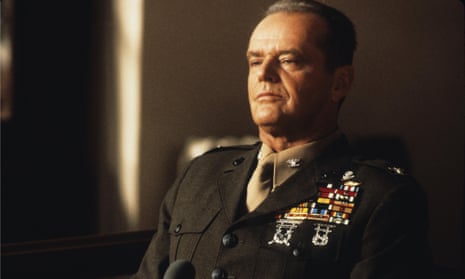
Bryn invokes Jack in
‘A Few Good Men’
On Friday's (5/16) Halftime Report, Bryn Talkington made a statement about consumer confidence.
"Those numbers — let me be crystal clear — are a counterindex. You should be buying when those numbers are weak."
Crystal.
Bryn said that going back 30 years, when consumer confidence numbers are this low, over the next 12 months, "the average return is 17 to 18%."
Steve Weiss countered, "I think you gotta be careful about that. Because, the real story for that is, consumer confidence usually dips when the economy's dipping, and then the Fed comes in and lowers rates. So that drives the market."
Bryn insisted "the data goes back to 1980 ... in general, it's been a very good signal to fade."
Honestly, we have no idea whether consumer confidence is a contraindicator as Bryn stated ... but we do know that, as far as Weiss' "real story," we've been hearing this consumer confidence number on CNBC for literally decades, and we have no idea whether it's a predictor of anything in the financial markets ... or whether it's even relevant ... to anything.
Panelists still comparing notes on who sold UNH the highest
Friday's (5/16) Halftime Report crew took up the subject of UNH, which is having a pretty bad week.
Kevin Simpson said he got stopped out of UNH. Kevin said he had a 6% position in February, sold 2% on Feb. 21 at 455 (gee, that was a great sale), and on Monday, "we took it down to 2%," selling at 389. Wednesday he sold it to 1% (we think that means he sold half of what was remaining); he said he'll be out completely Friday or Monday.
"I actually think it's very cheap here," said Steve Weiss, who thinks "the next quarter" or one after will be the "kitchen sink." But Weiss sold because "I don't think the stock's going anywhere."
Judge said "literally" there was a filing "5-6 minutes ago" about an insider purchase of UNH stock. In fact, that filing apparently boosted the stock for the day.
Stephanie Link dialed in to say "the stock is down 45% year to date (always a favorite metric of CNBCers), I think a lot of bad news is priced in." We were waiting for the "and oh by the way" ... we didn't QUITE get it, because Stephanie left off the "and," simply concluding, "oh by the way, the RSI, it's 12. That's crazy. Oversold."
Judge said, "Things can be cheap obviously for a reason." Judge said there were actually 3 insider buys of UNH. Rob Sechan said his shop is "looking to buy it" and previously "sold it at much higher levels a while back."
In a classy gesture, Weiss actually gave Jim Lebenthal (who wasn't on the show Friday) a "shout-out," saying Jim sold it "over 400."
Judge still won’t ask Weiss what ‘intermediate’ means
In the 10th minute of Friday's (5/16) Halftime Report, Steve Weiss again brought up "intermediate" (snicker), one of his favorite words of the past month.
Weiss actually claimed that CEOs aren't yet "willing to open up the pocketbook" and curiously said "In the short term, that's problematic for the market" ... even though Weiss has been saying all week that he's short-term bullish.
Rob Sechan said the CEO spending issue is a problem for the "intermediate term." Weiss said, "Well, short term and intermediate ... Short term, I'm still staying pretty much fully invested. Intermediate, I'm still very cautious." Yet again, neither Judge nor anyone else asked what "intermediate" means. When are we getting the recession that Weiss has been promising?
Rob: Market has a ‘huge put,’ either from Donald Trump or the Federal Reserve
Rob Sechan offered at the top of Friday's (5/16) Halftime Report, "I think the pain is, is certainly higher."
(That means he thinks stocks are going up.)
Rob said, "The worst of the tariffs are a little bit behind us." But Rob said there's "valuation concerns," so don't get "too seduced" (snicker).
Bryn Talkington said, "I think what's happened in the Middle East is just historic."
Judge insisted to Steve Weiss that it was retail who "hung in" and "came in" when the market was sliding a month ago. Weiss said "we're back to where we were last year" in terms of valuation, when the market was "gettin' a little shaky." So Weiss sees a "narrow trading range right now, absent some really good headlines."
Weiss said recession risks have "lessened," but he doesn't think you can "take it off the table." Nor can we take a "slowing economy" off the table, Weiss said.
Rob argued, "I still believe that there is a huge put, either (pronounced EYE-ther) by the Fed, or by Trump, on this market." Judge said, "I think retail- the retail investor, still believes that too."
Still another panelist recalls buying META in December 2022
Bryn Talkington on Friday's (5/16) Halftime Report revealed she sold TSLA August 23 $400 calls for $26; Bryn suggested there's resistance in the stock from 380-400.
Kevin Simpson said he bought AAPL on April 9 at 177. Kevin said, "A month ago — and that's when these professionals were buying." Kevin advised, "Don't go crazy chasing here."
CNBC's Dee Bosa said there might be questions about META's results from its AI spend. Rob Sechan questioned "is anybody surprised, given the complexity of their goals?" Rob said META has "executed unbelievably flawlessly" and revealed, "We bought it in December of '22; it's up nearly 450%. ... It is like building a supercar."
Judge cut in, saying that going back a few years, the META execution was "anything but" flawless. Steve Weiss said timing delays with tech products are something to be bought. Kevin Simpson said, "If you get a selloff in Meta, you should buy it."
Weiss has already ditched the XLE, his over-the-weekend trade. He said he didn't count on "progress" with Iran that could be depressing the oil market. Bryn said "Trump wants energy low. It's great for inflation."
Kevin bought KO (Zzzzzzzzz) and listed about 6 reasons; we're not really sure why. Kevin bought CSCO on Wednesday at 61. Kevin sold TRGP.
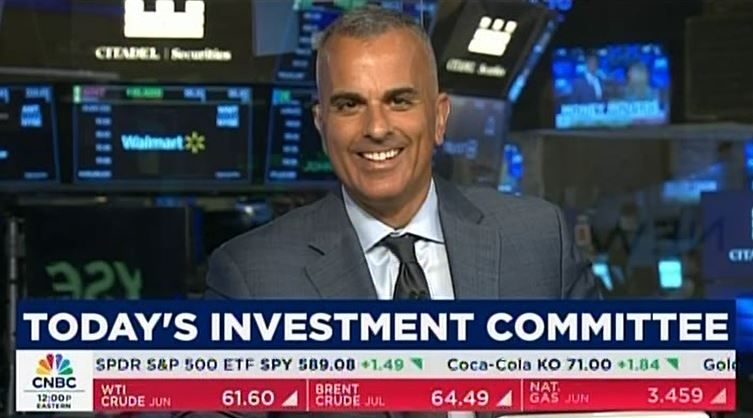
Jenny’s talking about the same old permabearishness; Joe’s talking about all-time highs
Early into Thursday's (5/15) Halftime Report, Jenny Harrington actually claimed that she's somehow "more uncomfortable" now than she was a week ago.
(Quick tangent — we'd much rather be talking about whether Jessica Chastain or Amy Adams would be playing Jenny in the movie ... either one would be a great choice ... but whatever.)
"However you cut it — however you cut it — tariffs have brought more uncertainty into our world," Jenny said.
Jenny claims "massive uncertainty" doesn't support a market at 21 times. But of course, "Here's the irony, maybe: I'm still fully invested." (Um, actually it's not "irony" ... it's the Weiss tactic of claiming whenever it's down that you've been skeptical but when it goes up that you're fully invested.)
Jenny claimed Thursday's market was a "nonsensical return in the AI trade." Josh Brown, though, wondered if it's "nonsensical" given those stocks' stellar earnings reports.
Jim Lebenthal cut in to say "don't lose sight of" the AI spending out of the Humain/Saudi Arabia announcement. Joe Terranova wondered why, if the market expected 30% tariffs on China at the beginning of the year, and we're at 30% now, the market wouldn't pick up where it left off.
Josh said it could turn out to be a "false rally," but the Nasdaq's had an "incredible rally"; Josh said he was "as bearish as anyone on this desk, in April," then the Mag 7 earnings came out.
After all that, Judge told Jenny that he doesn't see how she can "make a case today that we're worse off than we were a week ago." Jenny said, "The worse off is on valuation" (snicker) and again harped on this supposedly magic hike in multiple from 21 to 23 (even though all of her stocks are lower multiples).
Joe said momentum is suggesting "a run at the all-time high," but he's not sure there will be a breakout from there. Jim said if we set new highs, "FOMO comes in, and it comes in hard." Joe cautioned, "That might be a trap."
Joe wondered if Josh should be concerned about a "growth scare" over 3-6 months. Josh said, "How do you get a growth scare when the largest companies in the stock market are defensive?" Josh said we may have to accept that it's no longer a "cyclical" market. (That's a very interesting point. This page kind of began to assume this market is never going to be cyclical again once we saw how often the checks went out in 2020-21.)
Judge said at the top of the show that the "bias" he's hearing from people is that stocks can keep going up. Josh said the market will probably look through upcoming blips of inflation. Joe suggested the "casualty" risk from tariffs isn't so much inflation but "margin compression."
Joe reiterated his prediction of WMT being a "trillion-dollar company." Joe said he's "absolutely" maintaining his position.
Jim talked up buying more CSCO.
Steve Weiss, it figures, wasn't on Thursday's program. Judge brought up UNH and said Mizuho said it could get dropped from the Dow; Judge said Weiss is "fully out" but was "unable to join us today" (wonder why). Judge said another UNH defender, Stephanie Link, "wants to" buy more but isn't doing anything Thursday. Joe crowed about the JOET selling UNH 18 months ago (an eternity) and how it's got LLY.
On Fast Money, Guy Adami said DKS traded "right up to a downtrend line" in place for 4 years. Guy said Karen Finerman, who wasn't on Thursday's show, "thinks there might be another bidder out there." Tim Seymour said, "I think the deal goes through."
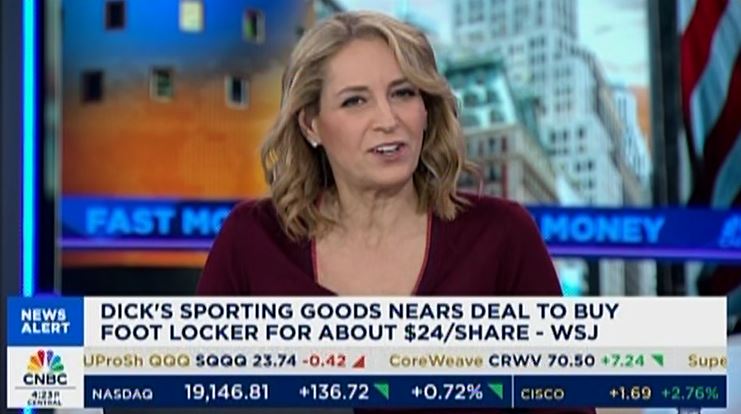
Fast Money crew delivers great instant analysis on DKS-FL
After the A Block on Wednesday's (5/14) Fast Money, guest host Dom Chu reported that the Wall Street Journal is reporting that DKS is close to a deal to buy FL.
Moments such as these are often the finest hours of Fast Money, when panelists react in real-time to breaking news and (far more often than not) cogently assess what it means for the stocks involved, and maybe more.
Wednesday's crew, including guest host Dom, more than lived up to that lofty standard.
Karen Finerman said "Mary Dillon came in with great fanfare." Karen said "it's not crazy expensive," so it "could be profitable" for DKS. Tim Seymour offered, "I'm just trying to understand what the strategic vision is" for DKS. Karen pointed out that a deal would give DKS "more leverage" with NKE and other shoemakers.
Steve Grasso agreed that DKS would add "leverage" by buying FL, and there would be "a lot more efficiencies" from dealing with the overlapping stores, so it's a "positive" for DKS; he'd "stay long" the name or "dabble" in it if not long already.
Karen said Mary Dillon is a "great operator," but this is "not a tremendous outcome" of her tenure at FL.
Tim Seymour suggested this deal might not have even been contemplated before the tariff situation.
So there you go. Tim makes a great point. However, we think Karen's and Steve's are even stronger; this would give DKS some added leverage with suppliers of a key product.
Einhorn on trade deficits: ‘I don’t understand what this problem is that we’re even trying to address’
Whatever his performance on Wednesday's (5/14) Halftime, Judge's real interest was in his Ira Sohn interviews later in the day on Closing Bell.
David Einhorn, the last big guest, at first talked about opportunities in European stocks (Zzzzzz). Then things got more interesting, as David said there was "terrorizing" of people and entities linked to Democratic voters, and a "chill" on businesses frequented by Democrats, and he's looked for stocks in that space to short.
Judge wondered if David could identify specific stocks for that purpose. David wouldn't give names but mentioned DKS as the opposite type of name, one that would have no trouble with this political environment, and suggested companies matching the opposite description can also be found.
Then things really got good when David stated, "The trade deficit, I've never understood why it's even that big of a problem in the first place. The idea that if some country is selling us goods, and we're getting the goods, that we're somehow being cheated for paying for those goods, I don't understand that dynamic. ... I don't understand what this problem is that we're even trying to address."
(Actually, we could fill him in a bit there ... The trade deficit was the tactic for quantifying the offshoring of jobs in the '70s and '80s, so that people complaining about that practice — and it's fine to complain about it — could attach some kind of numerical loss to it that may not actually be relevant to the problem in question.)
Earlier, Jim Chanos was on, with a rehashing of a tired theory. Judge told Chanos, "I was a little bit surprised, I have to say, when I found out that you're still short Tesla." Chanos said, "We have a big portfolio, so we have a lot of stocks we're short." Judge wasn't buying that rationale. Chanos said its earnings and revenues are declining while valuation is increasing on robotaxi hopes.
Both Chanos and Einhorn pooh-poohed how much money DOGE has actually saved.
Earlier, Sully on Power Lunch said Brad Gerstner's Invest America $1,000 accounts are part of the House GOP's tax bill.
Didn’t hear ‘intermediate’
or ‘recession’
Joe Terranova declared at the top of Wednesday's (5/14) Halftime Report, "The momentum in the near term points towards a run at the all-time highs for sure."
Joe said there's been a "change of possession" in the market (that's correct, a football term, not something related to the ending of "The Exorcist"), which means, "defense is off the field, and now here comes the offense." (Or put another more common way, it's risk-on, not risk-off.)
Bryn Talkington said we're in a "known known environment." Bryn said, like Joe, that semis can run, and so can financial management companies.
Steve Weiss and Judge revealed that Weiss in the last few weeks has bought back AMZN and NVDA. Weiss claimed he was "selling 'em at the highs" recently and that buying them back much lower "is how traders make money in the market."
Judge complained, "Weiss, you didn't tell us about this yesterday. Why didn't you tell us about it yesterday? April 25th to May 1st, you- you bought back Amazon and Nvidia."
Weiss said "a lot's gonna depend on what happens after the 90-day window closes," then conceded there's been "almost a complete give-up on the tariff moves, wisely, that Trump initiated." But Weiss said there's always "unsureness" (sic) of what this administration will do, so "you still have to be cautious in the market" (as opposed to all those other times when people recommend throwing darts at boards).
Jason Snipe said AMZN "warrants continued buying." Judge got into a semantical conversation with Weiss about his "core positions"; Weiss said AMZN is not one of them though it's a "sizable position" (Zzzzzzzz). Weiss said he likes AMZN but it's never cheap and he's got concerns about cloud and CEOs' enterprise spending.
Weiss explained that Donald Trump's negotiating strategy is to keep the people on the other end of the table "unsteady," but the downside to doing that is that allies and associates also wonder what's going on.
Bryn sold HOOD 50 calls
Joe Terranova on Wednesday's (5/14) Halftime Report said MSFT is the closest Mag 7 stock to an all-time high. Steve Weiss said he owns MSFT and isn't selling but doesn't think it deserves the multiple it's got. Weiss said this is a "go-go period." (That's not what he was saying a week ago, and the weeks prior to that.)
Weiss said of NVDA, "I'm out as it gets to 140" because chips from "the big hyperscalers" will start "coming into the market."
Jason Snipe noted NVDA is back to flat for the year.
Meanwhile, Bryn Talkington suggested owning names such as KKR and APO as a "good way" to get exposure to private equity; they're "a levered way to play the economy globally." Weiss pointed out how we're still "waiting" for the "IPO cycle" to finally happen. But Weiss said "it's only a matter of time" (we've heard that for years) until names such as APO and KKR "click in."
Joe said IBKR was "one of my better purchases" in the last month or so. (Or put another way, anything people were buying April 8 has gone up; the problem was, most people (despite what some say on CNBC) 1) didn't have a full warehouse of dry powder to spend on stocks at that time and/or 2) didn't trust that the bottom really was in.)
Judge said Goldman reiterated a buy on HOOD. Bryn owns it and said it's on a "monster move" and suggested "Goldman's just following price." But Bryn revealed actually selling calls at 50 that expire next Friday. (Those were a great buy.) Bryn thinks HOOD is "very overbought right now," and she wouldn't buy now.
Remember when Twitter/X and the blue checkmark was the biggest story in the news cycle?
On Wednesday's (5/14) Halftime Report, Steve Weiss said he bought more UNH (he just can't resist), despite saying a day ago that it's dead money for a while.
He said he bought because it got "cut by a lot of firms, which doesn't make a lot of sense."
Weiss sold VRTX, a stock that gets mentioned all the time that nobody really cares about (Zzzzzzz). Jason Snipe called ABBV a "core name" for him.
Judge and Joe Terranova noted how WMT has had a choppy year. Joe said a $1 trillion market cap is "exactly where they're going."
Judge said Telsey pinned a 145 on TJX. Joe said, "This stock does not get enough respect," saying it's 3 or 4 times the size of TGT.
Judge credited Bryn Talkington for having the "guts" to buy NKE while everyone hated it. Bryn said she bought that name and RH; "I felt really, really solid that what Howard Lutnick was saying, we're all gonna make iPhones and make shoes, was never gonna happen."
Joe's "maintaining" a position in BABA and thinks it could make a run at a ... first he said "all-time high" of 148, which sounded really low ... then he clarified to say "1-year high."
Joe said he's traded EQT for years, then played cost-basis hero, saying "most recently," he got into it in the "mid-30s." Bryn said she thinks oil stocks will struggle this year.
Joe said at the end of the show that Jim Lebenthal (who wasn't on the show) was happy that Joe mentioned Jim's name in regard to C.
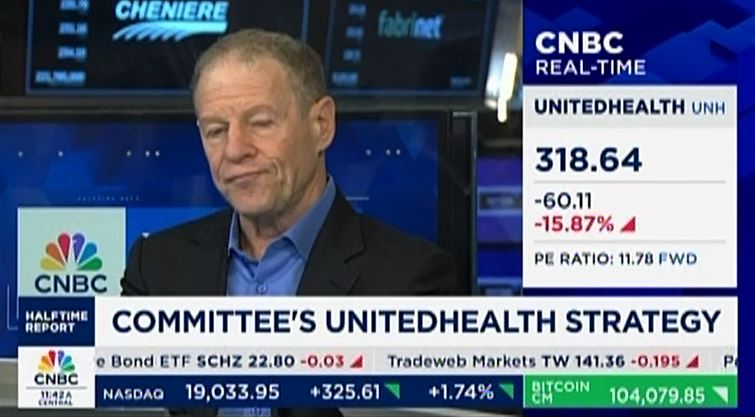
Judge once again won’t ask Weiss what ‘intermediate term’ means despite roasting Weiss over recent ghastly market calls
What would've been the whole A Block of Tuesday's (5/13) Halftime Report went to the Donald Trump speech.
After it ended, Judge quickly went to Steve Weiss, who Judge noted has been "overwhelmingly negative (snicker) on this market."
Weiss at first conceded his current recession odds are lower than a week ago, but then — as this page predicted — he claimed "Short term, I'm bullish on the market" and have "virtually no cash."
It's the "intermediate term" where Weiss believes "the recession comes into play."
And it's the "intermediate term" that Judge avoids like the plague, declining to ask one of his panelists what in the world kind of time frame is "intermediate term."
Weiss admitted, "I'll hold on to this exposure for a while" (translation: He's actually bullish, despite what he says). Weiss noted that on the tariff front, we only just got back to "where we were" with China and the U.K.
Weiss concluded, "As an investor, you can't get stuck in a position and a viewpoint," even though that's exactly what he did for weeks.
A little later, Judge brought up UNH, a recent favorite stock of Weiss, and asked Weiss, "What were you thinkin'?"
Weiss said "thank God it's not a core position at this point." Judge chuckled, "I don't care what it is, man" and asked why Weiss doesn't just unload it.
"It's still the world's largest insurance company," Weiss said, and he's got "tremendous respect" for the execs. Even so, Weiss admitted, "It's dead money here for sure, for a while."
Hopefully we'll hear soon about exactly where in the "intermediate" this recession is coming.
Jim still thinks streaming is a great business
On Tuesday's (5/13) Halftime, Judge told Josh Brown that Ed Yardeni has hiked his S&P target from 6,000 to 6,500. Josh chuckled, "Is any of that helpful? They're just marking to market."
Amy Raskin suggested tariffs may have pulled forward economic activity, and the tax bill is toeing a "fine line" in that it needs to be stimulative but can't affect yields negatively. Jim Lebenthal said he thinks there has been some "pull forward," but what he fears the most is that CEOs start to pull back (snicker).
Jim trumpeted DIS' earnings report and said, "The growth engine going forward is going to be streaming." (Nothing about the company being on "the balls of their feet.") Amy said she's actually sold DIS recently before the rally; "it was a bad sale."
Josh Brown bought more TOST; we've been hearing about that one off and on forever.
Steve Weiss said he bought XLE on Friday. He thinks he can get "another 20% out of it."
Tim Seymour on tariff truce: ‘What was this all about?’ (a/k/a Karen says ‘both’ blinked)
On Monday's (5/12) Fast Money, panelists dove in to the U.S.-China tariff agreement.
Tim Seymour noted the round trip certain tariffs have taken in the last 6 weeks and offered, "I'm really wondering what- what was this all about. Um, therefore I'm not even sure what has happened yet."
(Careful, Tim — people may try to vote you into office.)
Karen Finerman said she's "pleasantly surprised" and offered with more certainty, "China sort of blinked, actually. And we blinked." Tim wondered "Who blinked?" and Karen said, "We both did. We both did."
Tom Lee: Evidence was in the high-yield market
Unfortunately, Tom Lee wasn't on Monday's (5/12) Halftime Report.
But he was on Power Lunch, when Sully said this has been "one of the fastest stock recoveries in history" (something, um, Weiss failed to notice).
Sully said Tom could take a "victory lap" but hadn't. Tom gave Sully a few reasons why the market has done well since early April, the first one being, "The high yield market never confirmed the panic that we were seeing from economists about the economy."
When are we gonna hear from Steve ‘This time it’s different’ Weiss?
It's not often that Judge is making market calls, but viewers of Monday's (5/12) Halftime Report heard one when Judge observed, "The easy money has probably already been made."
(We wonder where that leaves Weiss, who wasn't on Monday's show ... but whose bear case has only gotten more emphatic the farther we get from the first week of April.)
Forever bull Stephanie Link insisted there's still room for "catch-up."
Joe Terranova said people on CNBC will offer "various analogies" about the market, but Joe said he'll stick with "mercurial," insisting he's been "using it all along."
Joe said sentiment is lagging way behind momentum. Joe noted NFLX being down and said it appears there's a "rotation" in the market. (This writer is long NFLX.)
Jim Lebenthal said, "I'm positioned in the market with cyclicals" and advised viewers, "Please don't time the market." (Too late for that with Weiss, who is going to say something like, "See I TOLD ya I was long, it's just the INTERMEDIATE TERM (which I won't identify) where we're going into recession!!!!!")
Judge observed that "this seemed like a fairly unprecedented situation" for investors in that it was like a "self-inflicted wound" that made people wonder, "they seem intent on wrecking it."
Jim admitted, "Honestly, I really at one point did think maybe he just wants to wreck the economy, just to wreck it." But Jim said, "Every crisis has its own unique flavor."
Joe said there's a "very clear path" and that "people are gonna try and fight this move higher." Joe said "calls for 4,000" are "unrealistic," and "I'd be surprised if we don't take a run towards new highs."
On the Trump-Tim Cook call, CNBC's Steve Kovach reported (as he did all day long on other shows), "Trump has been saying this for years, including in his first term, that Apple plans to build factories here, and then those factories never actually materialize."
Joe said AAPL "should raise prices; it's the Netflix model, it's the Chipotle model. They have pricing power. I don't think people are gonna flinch at all if they actually go and raise the price."
Joe said that yields could be the "one challenge" to the market.
Judge said Mike Mayo says JPM could be the first $1 trillion market cap bank.
Jim said "companies should rotate back to the balls of their feet" (snicker).
Lehman employee demanded more money from Weiss at a critical time — and got it
Guest host Frank Holland opened Friday's (5/9) Halftime Report telling Jim Lebenthal that Michael Hartnett says the market rebound is "likely over."
Jim said the rebound has been so big that such an opinion is not "too provocative a statement." Jim said the market would like to see "meaningful progress" on reducing or eliminating reciprocal tariffs.
Steve Weiss, who wasn't at Post 9 to hector Jim in person, joined remotely in a conference room in a golf shirt and said the market in the near term is in an "OK place," his new refrain. But he said we're "not" OK "intermediate-term"; Frank, like Judge, didn't ask what "intermediate term" means.
Weiss suggested the market may be developing "immunity" to trade-war headlines; he said the U.K. deal was not "impressive." He said he expects to hear trade details announced, but they take "years" to be completed. Weiss said the economy can't really deal with 10% tariffs.
Kevin Simpson said he's selling rips, even though, "May 9th feels a hundred times better than it did on April 9th."
Jim said the president's in a "negotiating phase" but unlike Weiss, Jim thinks "10% is something the world can live with," while "80% is just a complete non-starter." Jim told Frank that 60% is a "nonsensical number."
Weiss said, "I wouldn't listen to Trump saying buy stocks. I mean, his analysis is nonexistent. Just like, you meet with Jon Voight, he complains about Hollywood, all of a sudden, an executive order, 100% tariff on films."
Weiss further stated, "When I was running a large, uh, division at Lehman Brothers, I had somebody during a critical time come to me and say 'I'm leaving,' hold me up for more money. You know what I did? I paid them more money, and then, I took note of that, and eventually, I fired that person. That's what our trading partners are gonna do for us. They are not gonna foget this."
Weiss said he's not saying that the "end goals" with tariffs or cutting "the incredible bloat in the government" aren't good. It's just that "the execution is flawed" and may be "more damaging" than the problem. Frank clarified that Donald Trump met not just with Jon Voight but Mel Gibson and Scott Baio.
No one is accused of being too ‘flippant’ about Alphabet search
Kevin Simpson on Friday's (5/9) Halftime Report said he trimmed Alphabet. He said there's been a "decline" in ad dollars for Google.
Guest host Frank Holland said "a lot of people" have made an Eastman Kodak analogy to Google, but Google has a "quote-unquote digital camera" in the form of Gemini. Kevin said that's true that it's not Eastman Kodak but it'll still be less ad revenue.
Jim Lebenthal, who was warned by Judge this week not to be too "flippant" about this news (see below), said the question is "whether it's priced in or not." Jim asserted, "We're not gonna know."
Jim said a "better analogy" than Kodak is Xerox. But Jim said Alphabet will "stay relevant." Jim said Alphabet will adapt as META did to mobile and Apple's operating system changes.
Frank asked Brenda Vingiello why Alphabet can't just buy an AI company. Brenda said the company won't "sit still," and that "Gemini is really highly respected" (um, it's not), even though "I don't think the company has done a good job of really getting it out there and having people use it."
Kevin bought PLTR at 109; he said he can "bring in massive premium" writing covered calls.
Steve Weiss said of PLTR, he loves the company, he just can't "come to grips" with the valuation. Weiss said he thought the valuation was high at $30.
Jim actually buys more CLF
In the category of head-scratcher — no, it's beyond "head-scratcher" at this point — Jim Lebenthal is somehow actually buying more CLF.
Jim admitted this new development on Friday's (5/9) Halftime but said he's only buying in his personal account; "I'm not buying this for clients."
Jim said what should've been a growth story is now a "turnaround story." Jim affirmed, "I do have a lot of faith in management," hardly a surprise, though he thinks it'll "take time." (What happend to his recent prediction about if CLF gets a bunch of earnings and if CLF gets a higher multiple, then it's a $27 stock.)
Kevin Simpson sold VRTX, a stock that's never sounded interesting whenever someone on the show mentions it. Brenda Vingiello bought PWR. Brenda said Zoetis just wasn't getting the job done in her portfolio.
Brenda sold ADBE. Brenda bought TGT recently. Steve Weiss said TGT just doesn't seem worth the "headache." Weiss claimed, as he generally always does, rain or shine, that there's "2/3 of the country living paycheck to paycheck."
Guest host Frank Holland asked Weiss to talk about buying the IBIT, even though Weiss talked about it a day earlier.
Weiss during his Final Trade said he'd like to do a "public service" by doing an "intervention" for Jim on CLF.
Judge claims conclave took 3 days when it actually started Wednesday
Fairly early into Thursday's (5/8) Halftime Report, Judge cut to breaking news from the Vatican.
Pippa Stevens said that white smoke was emanating from the chimney, then Judge claimed "3rd time's the charm" after a "couple days of black smoke," even though the conclave was only into its 2nd day.
Bill suggests White House may try to actually pull back 2025 market returns so they happen in 2026
Bill Baruch on Thursday's (5/8) Halftime Report was basically making a lot of bullish arguments for the stock market.
Bill said "sentiment is bad," then he spoke of the market drops in early April and said "a lot of this has already been kitchen-sinked" and that people have been "offsides."
But then, tempering his own enthusiasm, Bill suggested ... and Bill must've been having lunch at Burger King, because this was a Whopper ... that maybe what would "contain" the market is that the White House doesn't want runaway gains in 2025 "because 2026 is the midterms," and the way to get 25-30% gains in 2026 ahead of the elections is NOT gaining 10, 15, 20% in 2025.
Steve Weiss immediately scoffed "that's ridiculous" and that the White House "is not gonna manage the market," get a certain percent now and a certain percent later.
Weiss is talking to everyone who apparently knows whether we’re having a recession (but he didn’t talk to Jerome Powell, who doesn’t seem to think so)
Steve Weiss stayed way too long in the Spring 2025 Bear Camp, and Judge has noticed.
Judge on Thursday's (5/8) Halftime bluntly told Weiss, "This market's up a bunch, man."
Trying to claim, as he always does during bullish weeks/months, that he's been bullish all along, Weiss said he said last week that "the short term, the market's going up; the intermediate term, the market's going down because we are going into recession."
Weiss insisted he "caught quite a bit" of the recent upward move and "I've actually done quite well, uh, over this period."
Judge wondered why Weiss is "so convinced" about a recession. Weiss said, "Because unlike reacting to news and reacting to momentum in the market, I'm actually talking to CEOs, I'm talking to heads of private equity firms. I'm talking to companies that I'm involved in, privately invested in. You know, I sit on the board. Things are frozen. CEOs are not investing in their business."
Weiss implied markets have been buoyed by the "massive rush" to buy stuff to stock shelves "before the tariffs hit." Weiss said supply chains aren't "frozen" like in COVID but are "very, very slow" and made some point about switching from China to India that didn't make much sense as it (maybe) pertains to the current market.
Judge insisted "we've gotten more guidance than maybe we thought." Of course Weiss disagreed.
Judge said, "Weiss — you're gonna argue with me no matter what I say. So I'm just gonna say it."
Weiss said, "No I'm gonna correct you when-"
Judge said, "No, no, no ... We're not gonna do this again."
Judge said the assumption was that guidance would be "terrible" and earnings wouldn't be this good. Weiss said "there is no disagreement on the quarter. The disagreement is moving forward. Again let me repeat — I'm long the market. Because the short term momentum's gonna continue."
Weiss conceded Josh Brown's point that "people aren't gonna lose their jobs" because replacing labor is too costly. But then Weiss said he'll "commiserate" with Ken Griffin and Paul Tudor Jones, "with all the others who see what I see. So, they're all idiots, we're all wrong."
Judge said, "Who said that they're idiots?"
"Well apparently you're discounting what they're saying," Weiss said, adding "you don't buy into it. You think it's gonna keep going and going, going."
Judge said "I didn't say that it's gonna keep going, and going, going, the only point I was making-"
Weiss said, "So we have no disagreement."
Judge said it's "gone I think a little bit better than many had- had feared that it would."
Weiss said, "Undoubtedly. That's the story of momentum."
Nobody on Thursday sounds too ‘flippant’ about the Alphabet news
Judge in the 19th minute of Thursday's (5/8) Halftime Report mentioned "Eddy Cue."
Steve Weiss said the "primary use case" for AI is search, and it's "unquestionable" that Alphabet's search market share is going down. Bill Baruch said it's not "new news" (prompting a rebuttal from Judge) that Google searches may decline. He trimmed Alphabet Monday but didn't sound as dire about the stock as others do.
Josh Brown said of the overall market that we're now getting "positive headlines" and not the "saber rattling" and "new demands."
Kari Firestone said the market will go higher "if the news flow is good."
Weiss bought even more NFLX, which was already his largest position. (This writer is long NFLX.) Weiss conceded it could get "overvalued." This page agrees with every bullish argument Weiss made/makes for the stock; the only thing is, maybe at some point, it becomes the dreaded "crowded trade."
Bill Baruch bought FAST with a "starter position." Weiss bought more FTAI. Weiss is back in IBIT. Bill owns it too.
Judge warns Jim about being too ‘flippant’ about the Alphabet news
Early on Wednesday's (5/7) Halftime Report, Judge said "the story of the day" was GOOGL’s drop, and boy was he right about that.
Judge said the drop was attributable to Eddy Cue's search comments.
Jim Lebenthal, who owns Alphabet, said he's inclined to "hold through this" and is "careful about knee-jerking one way or the other."
Jim pointed to when there was a problem with Gemini a couple years ago and the stock got "absolutely clobbered." Judge said that was a "bit of a different incident" and not like the "existential threat" that apparently is in the works today. Jim insisted that the Gemini issue a couple years ago "absolutely" was called an existential threat and the stock was down to the mid-90s.
Joe Terranova though said Wednesday's news is a "big deal" as it's about the "cash cow." Josh Brown said it's "extremely significant" and "Joe is right" and "Jim will eventually come around to this point of view."
Josh said Google won't disappear, but the ad "duopoly" of Meta and Google is "in question."
Josh said "the Gen Zs are going to ChatGPT first," they don't want a "treasure hunt," just an "answer."
Josh said DuckDuckGo and Bing are "not the competitors" for Google; rather it's the "standalone, uh, uh, AI services," in which, according to Josh, "the results are getting better."
Josh added, "It reminds me of PayPal, but on a much bigger scale."
CNBC's Steve Kovach stressed that the GOOGL story is "usage falling."
Shannon Saccocia said "57% of Alphabet's revenue is search." Jim insisted it's "not the first time" Google has faced concerns about search.
Judge told Jim that the "headline story" is the "definitive usage drop" in Google search, and Judge told Jim that Jim shouldn't be "flippant" about the gravity of the situation. Jim again said he doesn't "knee-jerk" his reactions and he's actually more concerned about the ramifications of the news to AAPL, not GOOGL.
Jim said he bought AAPL at 189. Joe said AAPL got added to the JOET, but, absolving himself, stated, "I had some questions surrounding the fundamentals when it did that." Joe actually said that for Alphabet, "Maybe in a worse-case scenario, this is more like Motorola." Joe suggested an Alphabet breakup might be the best thing for shareholders.
Judge told Josh that "someone we work with" was likening the AAPL-GOOGL news to DIS mentioning "cord-cutting" in 2015, "and that stock has not been the same since." Josh called that a "fantastic example" and "perfect analogy" and wondered if it was Becky Quick. Judge said the analogy did not come from Becky Quick. Then Joe said "obviously I'm joking" about the Motorola reference. (It didn't actually sound like it.)
Joe asserted that "it seems as though the Mag 7 is just beginning to really deteriorate."
Josh said not to overlook the importance of "travel-related search" for Google.
Josh says the BRK-A succession has hung over the stock, then says it hasn’t really mattered because the stock’s done great anyway
There was better news for Alphabet on Wednesday (5/7) when, late into the Halftime Report, Dee Bosa suggested it could put the squeeze to UBER.
Dee made some interesting observations about how Waymo or Tesla could develop or expand their own platforms for hailing rides. Josh Brown insisted that consumers don't want "10 different mobility apps," saying the consumer only cares about "price, convenience and speed," and that UBER will be the "hub" of ride-hailing apps.
Dee pointed out that not many companies have the money and resources to do what Tesla and Google are doing, and if Waymo expands its reach, it could be a "significant threat" to UBER.
Josh finally unloaded RDDT (despite saying for months that it's got ALL this writing that AI is going to use) (which, um, isn't exactly Hemingway).
Josh said the Berkshire succession plan is "as good ... as I have ever seen executed anywhere." (Translation: Not like how Bob handed over the reins at DIS.)
The funny thing about Josh's Berkshire praise is that no one mentioned what a (current) issue this is for DIS. (Translation: Bob will probably be getting another contract.) Jim Lebenthal talked up the DIS report and, as he always does, gushed about Disney's streaming. Jim curiously said, "Streaming is rapidly replacing cord-cutting." Joe Terranova said of DIS, "I like what I see here." (On Fast Money, Steve Grasso said he'd buy DIS over NFLX.) (This writer is long NFLX.)
Josh talked up CRWD (this writer is long CRWD) and said that traders can look at 390.
On Closing Bell, Jeffrey Gundlach, who was actually at the NYSE, brought up his favorite reference, "Mr. Magoo." (Who's a Rutgers alum.)
‘Some Peter Navarro isolationist viewpoint that none of us in America have’
The A Block of Tuesday's (5/6) Halftime Report got partially preempted by Donald Trump's remarks in the Oval Office, but not before Judge's fully stocked panel offered a few thoughts on the stock market.
"I think we're unfortunately in a wait-and-see mode," said Malcolm Ethridge.
Jenny Harrington asserted that we're in an "uncomfortable spot" and that the market isn't even pricing in low growth and insisted "nothing's better since April 2nd."
Judge pushed back that the employment report indicated a "pretty darn resilient economy." Jenny said that's not better, "It's just not worse."
Judge said "the consensus" was that things were getting worse. Jenny said that "every bit of data that we're looking at is pretty stale."
Judge aired a clip of Paul Tudor Jones on Squawk Box calling even reduced tariffs the "largest tax increase since the '60s" and saying something about "new lows."
Bryn Talkington argued that tariffs are a "direct tax on Main Street." Bryn even apparently is keeping score with her own tariff chart.
Judge and Bryn noted Scott Bessent's claim of having "asymmetric" information that everyone else doesn't have. "He should!" Judge chuckled.
Bryn said she doesn't think we'll "remotely" get to Paul Tudor Jones' potential dire scenario. "Who's gonna short this market," Bryn wondered, suggesting "the energy is actually to the upside."
Bryn said members of Congress want to get elected and "they're not gonna let Trump have emergency authority and torpedo the economy for some Peter Navarro isolationist viewpoint that none of us in America have."
And if Bryn isn't careful, some people will be electing her to office.
(Actually, let's rephrase that: BRYN, HAVE YOU THOUGHT ABOUT RUNNING?!!??!!?)
Malcolm made the case that maybe utilities are no longer considered as safe as Big Tech.
Judge cut into his own program to show Donald Trump's remarks in the Oval Office and suggested the headline is about the fact there's no talks with China. Judge said the U.S.-Canada relationship has been "extremely contentious."
After those remarks, Steve Liesman said M&A had its worst month since 2009. Steve said the Fed doesn't have a "good choice," but "only the least bad ones." Judge, who was Mr. Sanguine during the show, suggested Powell has "the luxury of patience" and "they say patient- patience is a virtue for a reason" (snicker).
Funny we haven’t heard the Rule of 40 applied to an underperforming company
Bill Baruch joined Tuesday's (5/6) Halftime Report midway through the show to talk about trimming Alphabet (we usually just use the company name rather than ticker because there are a couple similar tickers and we don't want to bother to verify which one they're talking about), AAPL, NVDA, AVGO.
"We're not bearish per se (snicker)," Bill told Judge, explaining the market "ran up" to resistance a week ago, and the Justice Department is a "headwind" for Alphabet, and the EU (snicker) is a headwind for Apple and Google.
Judge questioned Bill buying TSLA; Bill thinks it'll have a better 2nd half of the year.
Bryn Talkington took up the PLTR plunge. Judge said it was "not a bad report." Bryn said the stock made a "classic double top." Bryn said it's traded in "nosebleed territory," but she cited "the Rule of 40," which is to take the year-over-year revenues (39%) and add it to operating margins, and if it's over 40, it's "a great company," and PLTR is 83. Bryn suggested "the mid-80s" apparently as a possible landing spot.
Judge said UBS reiterated a buy for NFLX. Jason Snipe said it's seen as a "safe haven" in this market. (Imagine NFLX considered a "safe haven" 10 years ago.) (This writer is long NFLX.)
Longtime Halftime/Fast Money guest Richard Fisher, who offers regular, excellent commentary about the Federal Reserve, joined Tuesday's Fast Money to preview the Fed decision. Mel called him "Richard" 5-6 times (literally), however, Dan Nathan called him "Dick" and Michael Schumacher referred to "Dick Fisher." Guy Adami called him "Mr. Fisher."
Tariff threat to Hollywood isn’t clear whether it’s only ‘film’ or film and TV
Laura Martin is one of the best analysts on CNBC and is always one of our favorites to see.
Laura didn't disappoint on Monday's (5/5) Fast Money; her description of what Hollywood tariffs could mean deserves an Emmy.
Laura first stressed the importance of the word "films," as in, regarding Donald Trump's social media post, "He might not be making a distinction between TV and films." Laura said more than others, "Netflix gets hurt a lot," because "about 20%" of NFLX's "total content spending" is on "films," and "80% of that is done outside the U.S." (This writer is long NFLX.)
"The more important point," Laura continued, is that "this pivots economic priority to user-generated content," and that "2/3 of YouTube creators are sitting offshore, but they're not getting taxed ... and TikTok too ..."
Laura added that a film "takes 3 years," so Donald Trump "will actually be out of office before somebody could change their production location to make a film in America instead of offshore."
Mel asked if YouTube would take a big hit from this supposed tariff. We thought Laura already addressed that. Laura affirmed that it'd be the opposite, that people are watching these offshore-made videos for free, so it'd be "really hard" for the government to put up a "paywall." Though we do wonder if the ad revenue from overseas-produced content could be tariffed in some way.
Pointing out economics that the entertainment consumer never really thinks about, Laura said of any potential tariffs, "It is bad for Hollywood films because it is much cheaper to produce in London, to produce in Canada, to produce offshore than it is in America, right now." Mel asked for the "differential." Laura said "30%," typically, for offshore.
So basically, all this administration has to do is 1) determine whether "film" and "TV" are the same thing (and carve out exceptions for all the shows that are nice); 2) figure out how to confiscate YouTube and TikTok's ad revenue from offshore-produced content; and 3) create gobs more movie roles/jobs while the cost of moviemaking goes up 30%.
As far as the permanence of this tariff threat, Laura said, "He says something yesterday on Sunday, there's nothing that prevents him 3 days later from reversing himself, right, he sort of sees what the uproar is. ... If he's trying to create more jobs, him adding tariffs to films in production ... isn't helping job production ... I fully expect if he gets enough outcry from Hollywood, that he'll reverse himself."
Chris Verrone said NFLX, which was on a lengthy winning streak, got overbought and was due for a pullback for any reason. Chris said it's a buy on a pullback but suggested "950, 975." Guy Adami suggested 1,060 "makes sense."
DOGE was a ‘great gift’
Brad Gerstner, star guest of Monday's (5/5) Halftime Report, said the stock market had to fear "the nuclear Navarro approach" (snicker) but has now "realized" that "Trump at his core is a free and fair trader, wants to cut deals."
Judge asked Brad if the Board Challenge is still a priority there's been "brand damage" to the U.S. Brad said that "love him or hate him," Donald Trump "anchors his negotiations in a very aggressive place." Brad conceded some "remaining uncertainty" but claimed there are a "bunch of pro-growth administrative policies" in the works.
Brad acknowledged reducing his TSLA position but claimed it was part of overall derisking. Judge asked about Elon's possible brand damage. Brad shrugged that DOGE will be regarded in the future as a "great gift." Brad warned not to "underestimate" China companies' interest in self-driving cars.
Brad said in tech, it's a "stock-picker's market, this is not a market just to own the index and go to sleep." (Ah. We're back to that slogan again.) Brad said Warren Buffett "inspired me to start tracking stocks when I was in high school."
Judge asked Brad "where are you" in terms of Brad's Invest America account-for-life idea that Brad touted on the show in March 2024. Brad claimed "incredible progress" in Washington (we'll believe that when we see it) and "I think we are gonna get it in the reconciliation bill." Brad said to "think of it as a 401(k) from birth." He claimed UBER, DELL, ORCL and NVDA "and many many others" all said they'll contribute to accounts for kids of their employees. (Um, for those particular companies, paying employees a 1-time, $1,000 donation for each child, given all the other expenditures they make, really isn't a big deal.)
Joe: Market will ‘roll over’ with a 4.5 10-year
Judge's Monday (5/5) Halftime Report started just after Sara Eisen spoke to Scott Bessent, so Judge launched into the reax.
"I think his words are always pro-market," offered Joe Terranova, saying Bessent's commentary always gives investors "comfort."
Brian Belski assured Judge, "This is not a dead-cat bounce."
According to the screen text, Bessent actually claimed we're still getting stimulus from the 2017 tax cuts.
Anastasia Amoroso thinks the market momentum can continue; "we're starting to sense some of that optimism about the long-term gains."
Jim Lebenthal, who had a quiet show, said he thinks by year-end, "We're gonna be nicely higher in the markets than we are now." (What happened to Jim's small-caps trade.)
Joe still insisted, "The bond market is running the show" and that stocks will "roll over" if the 10-year climbs toward 4.5.
Belski bought DECK, AEO, TGT and AMD. Belski noted DECK is down "40+% this year."
Joe said the JOET sold CMG as well as DAL, and Joe called airlines "just a trade." Jim said over 5 years, DAL's return is "in line with the market," it's just that there's "ridiculous ups and downs."
S&P 500’s 52-week low apparently is 4,835.04 on April 7
Friday's (5/2) Halftime Report had so few fireworks, most folks could take a pass.
However, after a week like last week, it's kind of amusing to pull up Steve Weiss' comments from late April ... things like "recession" ... "stagflation" ... "eventual financial crisis" ... "long-term" thing ...
4
And then there was Brian Belski, finally dropping his S&P target on April 9, just 2 days after the short-term bottom. (The restoration of the earlier target has got to be coming soon.)
In the understatement department, we have Steve Grasso on the April 24 Fast Money contending "we're gonna be at 6,000 pretty quickly," then saying it will take "4-6 months."
Sarat Sethi observed of the markets on Friday's program, "All this is self-inflicted." Kevin Simpson said he could make a "strong case" that there's no recession.
Rob Sechan said it's "hard to be underweight" AAPL so he'll "stay at neutral." Kevin Simpson talked up writing covered calls on AAPL.
Rob bought BX.
Judge brought in Mike Tirico to talk Derby. (Generally, Judge — on his program — only cares about sports events that are broadcast by NBCUniversal properties.)
Rob said direction of the stock of RACE, which he owns, is "really tariff-dependent."
Farmland Partners, which has a market cap of $400 million, cut its dividend from a position of strength
After the A Block on Thursday's (5/1) Halftime Report, Judge revealed that OGN was having its "worst day ever," and Jenny Harrington, one of the day's panelists, owns it.
Jenny said it gives her a "special version of angry." Jenny told Judge she's not selling Thursday, but "I'm going to have to."
Josh tried to ask a question, but Jenny demanded time to give a complete rant about this stock that ... nobody else has heard of or probably invested in.
Judge skeptically asked Jenny, "Does anyone ever cut their dividend at a point of strength?" Jenny claimed, "Yes, actually!" Judge shrugged, "Not really." Jenny said, "The answer is occasionally," something called "Farmland Partners."
What we really wanted to hear about is further discussion of Josh's suggestion a couple weeks ago about Jenny getting a movie based on her recent book. Josh suggested Jessica Chastain, which we wholeheartedly agree with. But we're also thinking, maybe Amy Adams. Either one would be an outstanding likeness were this likable project ever to come to fruition.
Judge says Jenny wouldn’t want to buy AMZN at the level she claims she’ll buy it at
It wasn't really pitched that way, but Thursday's (5/1) Halftime was kind of a Mag 7 show.
Josh Brown said MSFT's results aren't necessarily indicative of the "next 200 names in the Nasdaq"; we should just "take this for what it is."
Joe Terranova said positioning in MSFT was "incredibly lean ... relative to the other Mag 7 names."
Jenny Harrington actually thought that it was either the end of 2020 or 2021 when Zuck got efficient and turned around META (just at the time EVERYONE on the Halftime Report was buying the shares); Josh pointed out that it was the end of 2022. (He didn't mention Brad Gerstner's famous letter from a few months earlier that of course made all the difference.)
Joe revealed that the JOET unloaded AMZN. (It's that time of year. Or that time of the quarter.) Joe actually mentioned the "juiced era in baseball where everyone was hitting 35, 40 home runs."
Josh said, "Amazon and Walmart's P.E. ratios have crossed ... Amazon is now a cheaper stock than Walmart." (Great. And when has P.E. ratio ever predicted a stock's direction?)
Jenny said she's not adding AMZN despite doing "a tremendous amount of work" on the stock. Jenny said she'd want to buy AMZN down "20%," perhaps if the market would "tank" for about 15 minutes.
Joe and Judge said that would be 161, and Judge challenged Jenny that at 161, the market "looked like garbage" and "nobody wanted to buy anything" and Jenny would've thought "it was going lower."
Jenny protested that she bought a couple other stocks no one's heard of. Jenny twice said "valuation matters." OK, fine, but please show us the evidence that P.E. ratios predict stock direction.
The JOET apparently bought AAPL and sold GOOGL. (Zzzzzzzzz.) Joe said it's "kind of puzzling" to him that the JOET still owns TSLA.
Josh said SPOT looks "incredible" and mentioned the word, as all SPOT bulls do, "Netflix." Josh said traders can use 540 as support.
It was mentioned that Bill Baruch recently talked about buying this name. Indeed, it looked like Bill's buy was a bit early, but the stock has for a few days demonstrated the resiliency that Bill suggested it has.
When Santoli came on, Josh gushed about Warren Buffett's buy and sell of AAPL, "the greatest trade that any human being has ever done, ever, proportional to like, the world."
Josh insisted "restaurant-level profit" is the most important thing in SHAK's earnings.
Cost basis heroes
Judge opened Wednesday's (4/30) Halftime Report saying "the word of the day" appears to be "stagflation"; to his panelists, it might've been "basis."
Kari Firestone said she was "one of the only people on the desk buying" when the market was "way down." Kari's bought APO and said it's been down 30%.
Steve Weiss though stated, "This is what the beginning of stagflation looks like," and "I've never seen so many companies do this," where the companies claim not to have visibility, so, for an investor, "how arrogant is it to say" that the investor has visibility.
"We never have visibility," Kari responded.
Later, discussing APP, Joe Terranova asserted that "point of entry is always important" and reverted to Cost Basis Rationalization, stating, "We entered this stock last July at $76. So we have a lot of room for error." Sure. If your goal is to avoid a round trip. If your goal is actually to go higher from here and not from a year ago, then, Joe said that if you don't own it, don't jump in now, there's "too much volatility."
‘At best, they’re gonna be memorandums of understanding’
Joe Terranova on Wednesday's (4/30) Halftime Report said to focus "first and foremost" on the bond market. Joe said the environment is "delicate at best."
Judge asked the group why V was flat. Jim Lebenthal pinned that on perceived consumer headwinds. Joe said that's "way too complex" (snicker) and that it's simply "everyone's long the name."
Getting down to brass tacks, Steve Weiss admitted, "Near term, I don't have the short position I had before," but once we hear about a deal with India, "you'll see the market pop."
Jim offered, "As far as where we go in the short term, Scott, I don't know, it really depends on these trade deals ... at best, they're gonna be memorandums of understanding." Joe countered that trade deals are already priced in.
Weiss called NFLX "my favorite stock." (This writer is long NFLX.) Joe said he's "not excited about the airlines."
Judge said Santoli will be at the Berkshire meeting. Remember a year ago, when Santoli was setting up there and joined the Halftime broadcast and Bill Murray secretly tugged on Santoli's shoe while live on the air.
Joe marveled at PLTR's recent bounce and warned "be very careful" about shorting it.
If we had to guess, we’d say China expects tariffs to roll back on their own
Guy Adami on Tuesday's (4/29) Fast Money explained why he doesn't think there's "confusion" as to the administration's message(s) about China.
We agree. If anything, the U.S.-China trade war seems more clear by the day: Beijing believes the tariffs will be rolled back without Beijing doing anything.
Of course, there is domestic risk to this approach.
As of now, only one side is claiming that there's been all kinds of talks. Which suggests that the pressure may be accumulating faster on that side of the divide. In recent days, that side's scorecard — the stock market — has cooperated nicely. That could always stop happening. In which case, we might start hearing about "giving importers some relief for a while."
In the category of "levers to pull," this is one of them.
Lori Calvasina actually said with a straight face, "I do actually talk to a lot of people that take comfort when Bessent is on."
Tim Seymour spoke during the Fast Money broadcast as if he were being paid by the word.
Tuesday's (4/29) Halftime Report was extremely humdrum (the lower the VIX, the less exciting the show). Josh Brown finally ditched PFE, for CVX, and touted UBER (as he always does) and SHAK (as he always does). Bill Baruch had to face questions about his recent SPOT buy. (Bill indicated that the position ... drum roll ... is less than a full position.)
Josh praised Dara, stating, "Whatever he says, goes." (In "Road House," the quote is, "What HE say ... goes.")
Weiss: Economy is ‘well on its way’ to recession
Judge on Monday's (4/28) Halftime Report mentioned Steve Weiss' "S-bomb" last week (see below) and asked Weiss if he was getting "all beared up" just as the market was getting "tactically bullish."
Weiss gave some kind of answer, but Weiss' sound didn't work, so viewers got a brief Shields & Yarnell routine. Someone on the set wondered if Weiss was getting "bleeped out." Eventually Weiss got his mike going and gave a speech and then told Judge he'd fade the bounce.
Judge eventually cut in, "I feel like you're tellin' us a riddle" and asked if Weiss could "translate."
Weiss said, "Most people don't need a translator but I'm happy to. ... Costs are going to stay high for the companies."
Basically, it's whatever angle can justify an ongoing bear case.
Weiss predicted "another 200 fictitious deals announced" by the White House that won't mean anything, and then, in a comment that could qualify for either Call of the Year or Bust of the Year, stated, "I believe the economy is going to recession" and is "well on its way."
Weiss told Judge, "I am bearish" but not "tactically bearish" for the next few days. Weiss predicted "below 5,000" for the S&P.
Joe Terranova contended, "The bond market is driving everything."
Joe suggested Monday was just a little profit-taking, while Jim Lebenthal said he agrees that it's just a "little bit of exhaustion."
Bryn: 5,250 to 5,740
Judge said at the top of Monday's (4/28) Halftime Report that this week will be "huge" (snicker).
Joe Terranova and Jim Lebenthal both mentioned the importance of the jobs report. Jim also suggested there "might be empty shelves this summer in some stores."
Bryn Talkington said, "All I hear is people are hanging on to their workforce en masse."
Bryn offered that "a 5,250 to a 5,740 is a really good range" for stocks.
Steve Weiss agreed with Bryn that post-COVID, companies aren't going to lay off workers.
Bill: Could be ‘50 to 100% upside’ in SPOT
Judge on Monday's (4/28) Halftime Report said Loop Capital dropped its META target from $900 to $695.
Despite Judge's amazement at the "reset" of expectations, it seems Loop's current META target is far more realistic than the previous one.
Bryn Talkington said you can't even really get much premium selling NVDA calls, so you just have to "sit and ride this out."
Judge said HSBC's double-downgrade of LLY, from $1,150 to $700, is "huge." (Judge didn't mention that Bill Baruch just reported buying it on Friday.)
Joe Terranova first touted LLY's gains for the JOET but still said "this is a good note." Joe said "there's too much variability" to LLY's revenue growth.
Bill Baruch dialed in to talk about buying SPOT (but didn't mention LLY from Friday). Bill said if SPOT can break out on an earnings beat, he'd buy the breakout. Bill suggested there's "50 to 100% upside in this stock."
Joe observed of SPOT, "There's a lot of people that are now buying this name." Judge said, "Good stuff."
Steve Weiss bought yet even more of UNH on Monday; "it's clearly defensive," he said. Of course it's "not quite a big position." (That means, if it goes up, he can say he made a great buy, and if it doesn't, he can say he hardly put any money into it.)
Jim Lebenthal, who had a quiet show, made QCOM, one of his longtime favorites, his Final Trade. (But nothing about CLF.)
JOET’s greatest hits
Friday's (4/25) Halftime Report, guest-hosted by Frank Holland, was rather humdrum as the markets quieted down.
Joe Terranova stated, "I love the fact today seems like a relatively calm and quiet environment."
Joe said Scott Bessent this week was the "sole messaging voice" on the administration's econmics.
Malcolm Ethridge said he wants to own tech, but not so much the names tied to the consumer and advertising.
Kevin Simpson talked about scooping up AAPL with a 1-handle. Joe shrugged that the stock is "kind of fairly valued."
Stephanie Link bought ISRG, a stock that years ago used to get mentioned but not so much in recent years, for whatever reason.
Bill Baruch bought LLY, an interesting buy, citing news that the GLP-1 drug in pill form was doing well. Bill also bought MCD, citing kind of a boring reason, "relative strength against, against other names."
Bill admitted that with his PLTR buy, "price is telling us something here." (Translation: When it goes up, it'll probably keep going up.) Joe said PLTR has had a "remarkable rebound" from the April 17 low of 66.12. Joe said the JOET bought PLTR for $16 a while back.
Judge seems to create an argument with Jim for absolutely no reason (a/k/a Steve suggests 6,000 in 4 months)
Shortly into Thursday's (4/24) Halftime Report, Jim Lebenthal first called Dave Tepper "Mark Tepper" before correcting himself. (It was probably only one of many things Tepper heard on NFL Draft Day.) (This review was posted overnight Thursday-Friday.)
Jim said not to be a trader, that it's only a "faraway minority" of legends who make money trading. Jim advised that the best approach is "buying the high-quality companies."
Judge, who (we're only guessing here) maybe thought Jim should be recommending "trading" beaten-down blue chip stocks by buying them, cut in to question that idea, stating, "that argument is a little specious in a market like you have now ... Why wouldn't you hyperfocus on the best companies in your book?" Jim protested, "That's exactly what I'm saying. How did I say something that sounded different than that? I said, buy the best companies."
Judge said, "But there are a lot of best companies that you would describe as best companies that have still gone down a bunch." Jim said, "I totally agree. And they will recover. It's a matter of time."
Judge said the WSJ headline "Trump meets his match: The Markets" was "interesting." Josh Brown even harkened back to the ONN/OFF ETF tandem (it was Dennis Gartman's and Fish's ETF concept, but Josh didn't mention that). Neither Josh nor Jim knew if those are still around.
Josh advised against day-trading this market and made a lengthy case for NFLX and UBER.
Jason Snipe said of NOW, "The concern was around DOGE ... They've obviously blown through that."
Eamon Javers said it's "sort of a mystery" as to whether the U.S. and China have really been having tariff meetings.
Bryn Talkington thinks the markets are getting "a little bit anesthetized" to trade war stuff. Bryn owns IBIT and ETHE, expecting a "180" in the "regulatory framework."
Bryn touted HOOD, and Josh agreed.
On Fast Money, Karen Finerman indicated she can "exhale" a little bit on Alphabet. Tim Seymour bluntly called it a "huge exhale." Tim and Guy Adami recapped their stint earlier in the day on Kelly Evans "Stock Draft" program. The Sicilian thing, mentioned numerous times, got a little old (both in the Draft and Fast Money), but Guy did impressively note in the Draft show that the Pittsburgh Steelers not only drafted 4 Hall of Famers in 1974 but added another (Donnie Shell) as a free agent.
Steve Grasso said, "This is the bottom I think in Intel."
For the broad market, Guy Adami said he doesn't think the market is "out of the woods yet." But Steve said, "I think we're gonna be at 6,000 pretty quickly." Asked to define "pretty quickly," Steve suggested "4-6 months." Karen said, "I thought you were gonna say 'Thursday.'" Steve's "pretty quickly" got our attention; Steve's 4-6 months got our yawn.
Weiss says ‘s---’ on live TV
Wednesday's (4/23) Halftime Report was further proof that CNBC doesn't have a 7-second delay during business-day programming.
Steve Weiss warmed up early on the presidential administration saying that Donald Trump having "one day of, uh, of him negotiating against himself ... should not be applauded by the market."
Joe Terranova noted that we're hearing from Scott Bessent this week, not Howard "ISN'T THIS AWESOME?????!!!!!!!" Lutnick or Peter Navarro.
Sarat Sethi seemed to say rather innocuously that the administration is "watching the parameters of this" as it floats ideas such as firing Jay Powell. Weiss seemed to think that's nothing to celebrate.
Weiss said it's "ridiculous" to think long-term investors need to be invested all the time, citing names like Griffin and Tepper and Cohn and Renaissance, and then Weiss told Sarat it's "ridiculous" to give the administration "credit" for floating polarizing economic "soundbites."
Judge countered that administrations "for as long as time has existed" have tried floating a "trial balloon." Weiss said he doesn't disagree, but other administrations throw out trial balloons that are "within the realm of what's reasonable."
Then Weiss said, "The market rallied on Scott Bessent saying, 'Oh, tariffs are gonna come down with China. No s---. You mean they're gonna stay at 200%? C'mon, everybody knew that."
Jenny Harrington noted that Weiss said a bad word. Judge said it's "cable."
Weiss bluntly stated that Donald Trump "has no ability to fire Powell."
By the end of the show, Weiss was back to making UNH his Final Trade.
It’s a Hulu, not Netflix, market
On Wednesday's (4/23) Halftime Report, Steve Weiss talked about his hedging and how he's "able to take those off quickly." (Translation: If the market's going down, he's always hedged, but if it actually goes up, he's getting exposure.)
"My view hasn't changed," Weiss told Judge, before uncorking this theory:
"This market's trading like it's watching Hulu, where there's a new episode dropping every week, and that in a compressed time, vs. like Netflix, which is what the market wants to see, where all the information drops at one, and you know what the story is," Weiss said.
"A rare good analogy," Judge complimented Weiss.
Joe Terranova said there's been a "very clear softening of the rhetoric."
Judge said Ken Griffin says the trade war has devolved into a "nonsensical place" and the U.S. is "eroding its brand." (It was unclear from the quote marks on the screen exactly which parts of this, if not all, are a direct quote.)
Judge asked Jenny Harrington if this is a "bear market." Jenny said, "I don't know."
Jenny at one point said, "I'm not going to try to be cute." One thing they didn't talk about on the program was the recent notion of Jenny as Jessica Chastain/Jessica Chastain as Jenny, which is a very intriguing concept that we'd like to hear more about.
Halftime Report viewers get bonus crash course in elite literature
Rob Sechan on Tuesday's (4/22) Halftime Report suggested, "We're all kind of waiting for Godot." (If you're watching Halftime, you've got culture.)
Moments later, Josh Brown went on to explain "Waiting for Godot" and said the "permanent condition" for 2025 may be endless negotiations. (Which actually sounds kind of like Weiss' "single event" refrain.)
Anyway, Rob said, "I do think that clarity is ultimately going to come. It's just a question of when."
Josh did agree with Forever Bull Stephanie Link that "sentiment is extremely washed out."
Stephanie sees lots of tailwinds, including even the weaker dollar.
Deep thoughts from Scott Bessent
Judge on Tuesday's (4/22) Halftime Report said Bloomberg reported that Scott Bessent told people at a conference that somehow (unlike most things in this administration) wasn't on TV that "the tariff standoff with China is unsustainable and that he expects the situation to deescalate." But the negotiations "haven't yet started" but a "deal is possible."
Wow. That is some profound analysis. From one of the ringleaders of the tariff train we're on. A deal is actually "possible." But the negotiations "haven't yet started."
Jim Lebenthal asserted that market volatility is "all about the trade war."
Jim said markets can adjust to uncertainty as they did in the first Trump term from 2018 to 2019. Josh Brown cut in, "They got bailed out by the Fed." Jim said, "That's fine." Josh asked if it could happen this time. Jim responded, "It could."
Judge tried asking Jim, if the Fed cuts, is that "unequivocally positive" for stocks. Jim apparently equivocated too much, saying the market would go up briefly, then down, then hypothetically explained how the Fed might explain a cut.
Judge decided, "You're making it too complicated," and Rob Sechan emphatically said "It would be negative because they shouldn't, they should not cut."
But Josh and Stephanie Link argued that the Fed should cut. Josh has previously made decent arguments about this, citing unemployment as lagging and the fact Europe has cut.
How about Judge landing Al Michaels for a chat about the NFL Draft??????!!!!!
On Tuesday's (4/22) Halftime Report, Jim Lebenthal mentioned buying a "meaningful amount" of AAPL recently and again told the story about getting angry calls from clients when AAPL is trimmed from their portfolios.
Judge told Josh Brown that the FTC is suing UBER, alleging that UBER charged for Uber One without consent. "It's not true," Josh said. Josh said litigation goes with the territory with Big Tech and you can't "react to every headline."
Jim was asked by Judge why no one on the desk loves MCD. Jim said he won't "hate on it" but it's more of a "defensive" name to him, and he wants to be "more aggressive." Josh said it's on his best stocks in the market list, and Josh also said KO has broken out.
Speaking of that best-stocks-in-the-market list, Judge said Josh added NOC to that list just 11 days ago (snicker) (Oops) (You might be able to see that list on your screen if you get CNBC+.) (Maybe.). Josh doubts it will stay there.
James Gorman spoke with Leslie Picker during the show and said he can't talk "publicly" about the DIS succession, but he promised an "answer" (interesting term) by "early 2026" and insisted "that will happen." (We'll make a wager that the next DIS CEO contract goes to someone with 4 letters in their last name and the first is an "I.") (Unless they get Brian Niccol.)
Weiss again denies something he just said (but this time, Jim isn’t around to pin him down)
For the umpteenth time, Steve Weiss on Monday's (4/21) Halftime Report said of the current ... something or other from the presidential administration, "I don't see this as an event" but a "long-term" thing and ... key terminology here ... an "eventual financial crisis."
Judge asked if Weiss is 100% in cash. Weiss said he's "almost completely hedged."
Weiss said, "The road is already going towards recession ... and going toward stagflation."
Judge wondered if Weiss won't buy stocks as long as Donald Trump is president.
Weiss actually said — with a straight face — that Donald Trump could remove Hegseth, Kennedy and Gabbard, and "he could show that it's not just an echo chamber of sycophants, but people that are willing to challenge him on policies so that he can get to a better place."
Yes, he said that with a straight face.
Assessing Weiss' comments, Brian Belski said, "I love you Steve, but coming on air and tellin' everybody we're going to go into a financial crisis, I don't think that's the right message for anyone."
Belski added "oh by the way" literally 4 times. (He added another one later.)
Belski suggested, "You're probably letting your political views, and your personal views cloud what's happening in terms of what you're doing in investing." Belski said "I think 2 years from now, the market is significantly higher."
After waiting to respond, Weiss protested, "There are a couple of misstatements there. I didn't say it was a 'financial crisis.' I said there's a market crisis, No. 1."
"You used 'financial crisis,'" Belski correctly interjected.
"Brian, you spoke, I'm gonna speak now," Weiss said, wondering why commenting on the presidency can't "just be analysis."
Weiss stated, "I'm not a liberal, I'm not a registered Democrat, I'm an independent, and before that, I was actually a registered Republican, so why don't we put that aside, why don't we leave the death threats out of Twitter, which I'm not on, and all the other stuff."
Weiss added, "And Brian, I apologize for not coming on and being a cheerla- cheerleader like you; I prefer to state the facts."
‘4,000 to 4,500 is where we go’
Joe Terranova said at the top of Monday's (4/21) Halftime Report that he's been using 2 words to describe the stock market: "treacherous" (OK) and "mercurial" (snicker).
Joe said, "Sometimes the best trade is no trade," and if you're looking for a short-term opportunity, "You're hoping you get a tweet."
Amy Raskin said the market environment is "anything but perfect," but she noted stocks are "only down like 10% from the start of the year."
Amy said she knows things look oversold technically, but "fundamentals have changed dramatically."
Steve Weiss apparently has a new approach, analyzing the budgets of the biggest Cabinet departments (snicker). He said there's "chaos" in the Defense Department, and Weiss has concluded "you can't invest," that "CEOs are frozen," and "I still believe 4,000 to 4,500 is where we go."
But Judge said (while addressing Brian Belski remotely, which made it at first sound like Belski's note) that UBS has got a new note, "we're upgrading U.S. equities." Belski made some analogy to sentiment in Europe ("they certainly do not, will not come back to the U.S. anytime soon"). Belski admitted "we can't pick when this thing's gonna be done," but he repeated his earnings-bottoming-in-9-months thing which apparently will cause multiples to rise, and said he's "aligned" with UBS' view.
Belski claims with a straight face that TSLA 2025 is like AAPL 2003
In a startling — or maybe not so startling — bit of self-confidence, Steve Weiss told Judge on Monday's (4/21) Halftime, "So far, I've been dead right on the market. Every sale I've made's been a good sale."
Weiss insisted the market is "still overvalued now" and also insisted the Fed is "not riding to the rescue" this time and that the market's been conditioned to expect a V-shaped recovery all the time. (Yes. And once there's a 1-year-delay-on-all-tariffs announcement, there will be a V-shaped recovery.)
Judge said Goldman Sachs, in "a little intraday color," just put out a note that said we're in a "buyer's strike."
Amy Raskin said gold is "not overbought by any stretch of the imagination."
Brian Belski said he still believes in Alphabet and correctly mentioned YouTube as the driver. Joe Terranova said ad spend is "clearly" the risk for Alphabet. But Joe said the "more important earnings report this week is Tesla," because it "speaks directly towards the tariffs."
Brian's long TSLA and twice said "at the end of the day," it'll be higher in 2 years. Brian even said, "I really think that Tesla is to right now what Apple was in 2003, 2004."
Weiss said, "I gotta move to Naples, man, they're putting something in the water there that's unbelievable."
Late in the show, Judge had to do the CNBC+ promo, as Mel did a day earlier on Fast. The list of headlines in small fonts on the side of the screen didn't exactly look like a must-have.
Halftime again had the Bitcoin Gal who mentions whatever the price of bitcoin is but never really has any scoops.
Guy Adami: Trump hasn’t fired Powell because people told him it’d be ‘catastrophic’
On Monday's (4/21) Fast Money, Guy Adami was rather outspoken.
Guy said dollar weakness "should be alarming a lot of people out there."
When the subject of Jay Powell's future came up and whether he could be fired, Guy said, referring to the president, "Enough people probably told him, that would be catastrophic."
Karen Finerman said "The Democrats sort of caved" during shutdown negotiations weeks ago, and now the economy is sort of on the Republicans.
Rich Greenfield makes a sensational point, not really about Netflix (but it may affect NFLX)
On Thursday's (4/18) Halftime Report, Bill Baruch revealed a new position in NFLX.
More on that in a moment. (This writer is long NFLX.)
Skipping ahead a few hours to Fast Money, where the panelists were able to comment on NFLX's earnings report, Guy Adami said he thinks the NFLX quarter is "good enough" to get through the all-time high.
Tim Seymour said NFLX is a "very defendible" story.
Back to Halftime for a moment. A big part of Bill's argument for buying NFLX is something we haven't actually heard from anyone else — Bill apparently made a comparison of the Nasdaq with the Q's and found it's "back at that gangbusters 2018 level ... I think it's gonna break out above there, which tells me, the Nasdaq will continue to outperform the Q's."
But Bill also acknowledged the usual things we hear about NFLX all the time.
Josh Brown, also on Halftime but remote, said after Bill spoke about NFLX, "I basically said that whole thing, but I did it yesterday." Nothing was stopping Josh from saying it all again, so he did Thursday.
OK. Back to Fast Money.
Steve Grasso sounded ... not terribly impressed with NFLX.
Steve stated, "Amazon Prime has actually- has a bigger market share than Netflix, quietly," and as for NFLX, "When I look at this, it looks toppy."
Steve said he thinks it can get to the level mentioned by Guy, but "they don't provide the subs; I think they know their growth is slowing."
Steve concluded, "They're the name to beat," but he "probably wouldn't be buying into it right here."
That aside, given what we're hearing about this stock on CNBC, this page is starting to get suspicious that NFLX, even below its all-time high, may be a "crowded trade."
(Note: We're not actually sure a "crowded trade" is something that exists. But it's a staple of CNBC commentary, so what the heck.)
When Steve Weiss is delivering 2-minute speeches about the stock a couple times a week, and when everyone basically this side of Jenny Harrington is gushing about this business ... you start to wonder if there are many incremental buyers left.
Over time, there have been a few horrifyingly sharp pullbacks. Among the risks: Embarrassing tech outages, or any type of programming or hiring that maybe sparks a war with ... certain political figures. There's also the possibility of spending too much, on bad or not-particularly good, content, but admittedly, there's so much on the service now, a couple bad series aren't going to sink the stock.
We're trying to think of how many other stocks have been so universally loved on the Halftime Report in recent years. Maybe NVDA, but once the surge began, people were always questioning whether they've already missed the run. UBER would be another contender, but there's often been a skeptic or two about that stock.
Back to Thursday's Fast Money. Later in the show, after panelists had already debated NFLX, star guest Rich Greenfield got a turn and noted all the positives in the earnings report.
Mel wondered about the potential of a "tax on services" or "tax on content" that could hurt NFLX. Rich shrugged that those kinds of things can always happen, but Netflix has got "an incredible price-value equation."
However, Rich offered his own concern. "The craziest thing is, YouTube is getting stronger by the day ... It's just stunning ... The power of user-generated content. I don't think this is just a risk for Netflix. I think this is a risk for every company in the media universe. The power of YouTube scares me."
Note that Rich did say "user-generated content." We've noticed that "user-generated" could include stuff like music or TV/movie material that the uploader didn't actually "create" themselves.
(This writer is long NFLX.) (This writer in the last 24 hours watched content on Netflix and homemade content on YouTube.)
Judge isn’t interested in onshoring T-shirts and sneakers (even though Howard says we’re subservient to those who make them)
Near the end of the A Block on Thursday's (4/17) Halftime Report, Judge brought in Steve Liesman to discuss Donald Trump's response to Jay Powell's remarks.
Steve indicated there was nothing alarming about what Jay said and "it's not rocket science" for Powell to say he needs to wait to see how things look with tariffs, etc.
Judge claimed Scott Bessent has been advising Donald Trump that markets would have a problem if Powell were fired.
"Powell is not saying, 'I won't cut.' I think Powell would like to cut," Steve insisted.
Josh Brown offered, "Powell's gonna be doing more cuts in the 2nd half of this year than he thinks he is."
Judge tried to convince the others that we'll eventually have a tariff deal; the only question is how much damage might be done along the way. Josh said, "Everybody knows there's a deal," and if the market didn't believe that, it would be 15 times earnings.
Josh described Kevin Warsh as "the Fed chair in waiting" and married to the daughter of one of Donald Trump's best friends. Josh though said he agrees with Trump in that, "This economy is not a 4½% Fed funds rate economy ... I think rates need to be lower." (That's a fair point. We'll have to tackle that later.)
Steve questioned the notion of a GDP "tailwind" from onshoring, suggesting it's the "least efficient" choice by companies for sourcing products. Judge asserted that the onshoring of "chips alone is, is good for GDP." Judge said that's what he's "primarily" talking about, not "T-shirts and sneakers."
A couple hours later, on Closing Bell with Kevin Warsh news, Steve Liesman (who was busy all day) told Judge that he's got "2 bits of what's potentially good news out of this," which is that some people around the president are supposedly "dissuading" him from replacing Powell and that Kevin Warsh "venerated the institution itself" and it would not be Warsh's "preference" to take over under these circumstances. Steve added that coincidentally, "Kevin is not a loose-money guy."

Jessica Chastain as Jenny (cont’d)
Josh Brown said at the beginning of Thursday's (4/17) Halftime Report that one problem for NVDA is that "it's a political story wrapped around a cyclical story."
Josh said "the median tech stock is in a 30% bear market."
Bill Baruch, who's had some great calls in the past year but hasn't been on for a bit, said he's "not projecting 180, you know, anytime soon" for his buy of NVDA, but he thinks the "back half of the year" will be "much better" for NVDA and the AI trade. "Right now, it's uncertainty," Bill said.
Jenny Harrington said, "We're all looking for the answer. And the answer doesn't exist right now." Judge said, "I know, but everybody knows that ... We've said 'uncertainty' like 650,000 times in the last week."
Jim Lebenthal, who had a quiet show, argued that NVDA's multiple already reflects more than enough earnings headwinds; Jenny, of course, argued that it does not.
Bill bought more AVGO. Bill said it's a "very tactical" trade. Bill conceded the stock is in a "little bit of no-man's land."
Bill also bought more META, citing presumed strength in a possible "recessionary-like quarter or 2."
Jenny actually bought MCHPP. The screen graphic and the conversation for a while indicated she's long MCHP. That stock is (semi-)famous as the one Pete Najarian mocked about 10 years ago because it issued some kind of warning that hit the whole sector and Pete scoffed that it's not as important as, say, INTC. But eventually, Jenny mentioned it's apparently the convertible preferred with the symbol MCHPP.
(We were really hoping the panel would take up the recent conversation about Jessica Chastain playing Jenny/Jenny playing Jessica Chastain, one of our favorite Halftime conversations in recent memory. But no one brought it up.)
Steve Weiss dialed in to say he bought more UNH in the morning. Weiss said it's got an "excellent valuation."
Remember when not too long ago, everyone was hailing Tepper’s China call?
Joe Terranova on Wednesday's (4/16) Halftime Report offered a public service announcement of sorts, lamenting that zero-day options are "to the detriment of market conditions."
Joe complained, "Algorithms are being written surrounding the zero-dated options" and that "literally," the market from 2-4 p.m. is "being driven by zero-dated options."
Steve Weiss posed the question of whether BABA gets "delisted" and said he doesn't see the "upside" now.
Kevin Simpson articulated a fine point about TMUS and the telcos, how they spent 3-4 years unable to "get out of their own way" but are better now.
Judge doesn’t ask how a stock can be both a ‘buy’ as well as possible ‘dead money for another year’
Wednesday's (4/16) Halftime Report was so sleepy, the most exciting topic was people talking about selling upside Mag 7 calls that expire within a week or even Thursday.
In the process, Kevin Simpson was heard to say that NVDA could be "dead money for another year," but for a longer-term investor, "I think 104 is a buy."
Judge didn't ask about that seeming contradiction.
Steve Weiss sold half his NVDA stake and said his "bearish sentiment on the market has not changed" and is even "fortified" (snicker) by tariff fallout.
Joe Terranova said Weiss made a "trading move" and that "Everything is mercurial right now."
Anastasia Amoroso said chips are caught in the trade war and "may still have more downside to go."
Addressing all of those ridiculous AI capex forecasts (by analysts and the companies themselves) of the past year (you know, how the rest of the Mag 7 is going to spend $100 billion apiece on Blackwell chips just so that everyone knows they bought them), Anastasia said hyperscaler spending is "very much a question mark."
Weiss said he sold calls in META and NFLX, "far out of the money" but "near-term expiration," April 24-25. (Bet those are worth a fortune.)
Kevin sold a 1-month covered call for MSFT, a 430 expiring May 16 with a "7.5% annualized return."
Kevin sold an AEM covered 125 call expiring Thursday. Kevin pointed out the stock is "up almost 60% year to date."
Kevin the mind-reader
Judge on Wednesday's (4/16) Halftime Report to his credit grilled Joe Terranova on IBKR, a stock Joe has seemingly recommended forever; “What happened.”
Joe claimed the stock was down because (this was first of several metric reasons) "they missed by 4 cents on EPS." Then Joe insisted, "I think you can buy this stock against 140," because "the trading activity was ridiculously strong."
After jotting down Joe's comments, we were thinking, but what if the account holders switch to HOOD so they can bet on sports and buy bitcoins?
Much later, during Final Trades, bingo — Kevin Simpson, citing Joe's "great bull case on Interactive Brokers," made his Final Trade HOOD.
(OK, Kevin didn't say anything about sports betting or crypto.)
Later on Power Lunch, Sully complained that he's renovating a home, so he'll be feeling tariffs' impact in "real-time, firsthand" for 9 months.
Joe pins a $1,250 on NFLX
Judge on Tuesday's (4/15) Halftime Report asked Josh Brown, who wasn't at Post 9, to explain selling Alphabet, which Josh did (Zzzzzzzz), and then Josh launched into a speech about why he bought NFLX and considers it "the best stock in the market" for this year.
(This writer is long NFLX and is glad to hear kudos for the stock on the program, but it tends to be the same thing over and over, including from Karen Finerman at the top of the 5 p.m. Fast Money, which led off with the Netflix story.)
Joe Terranova said he bought NFLX a year ago in April under $550 and "some people looked at me puzzling (sic) for doing it." Joe said, "Josh reaching for it here close to a thousand, I have no problem with that, because I think the stock clearly takes out the 1,064 high and goes to 1,250."
On Fast Money, Happy Dan Nathan said some call NFLX "recession-proof," but Dan pointed out that in 2022, it lost "70% from its all-time highs." (Which is a great point, actually.) Guy Adami said 83 or 85 have been technical support levels for DIS, and it's worth a "flyer" here.
Late on the Halftime Report, Josh and Stephanie Link said the same thing about cybersecurity that Josh and Joe and Karen said about NFLX.
Judge hasn’t heard ‘anybody’ suggest $305 in S&P EPS for 2026
Dubravko Lakos joined the set of Tuesday's (4/15) Halftime Report and offered about 15 potential S&P targets for 2025 (sorry, pass).
Josh Brown questioned Dubravko's S&P earnings number of $250 for 2025; with a 20 multiple, "you get to 5,000," Judge noted.
Dubravko insisted that for any year-end S&P number, the 2025 EPS number is "irrelevant."
He said the Street number is $305 for 2026.
Judge was alarmed by $305. "The number reflects a level of optimism that I haven't heard from anybody," Judge told Dubravko, who said it's "an extrapolation."
Dubravko said the onshoring story has some "partial validity."
Joe Terranova opened the show by speculating on the "messaging in the market" (Zzzzzzzz).
Shannon Saccocia said her view is "more on the side of being time to buy." Of course.
Joe almost referred to "natural grass" instead of "natural gas."
Joe says he sensed on Friday that AAPL was getting an exemption
Judge really struggled to determine what's front and center at the outset of Monday's (4/14) Halftime; Joe Terranova got first crack and mentioned a half-dozen indicators, including "the SMH lower."
Steve Weiss again made his now-everyday point about what happened in 2008 being "certain events" (an assertion that has made little sense since he started making it) (or, as he likes saying this month, tariffs are not a "single event"), whereas today, tariffs are "destabilizing" and CEOs "don't know where to go" but won't say so publicly "out of fear of retribution."
Judge and a screen graphic noted Weiss buying a flurry of stocks, GS, NFLX, NVDA, TSM, META, LDOS. Weiss said he's had a trade in META but is "probably stopped out of it."
Weiss said he doesn't think "worst case" is priced into the market, however, Weiss thinks "we're reaching a point of exert- uh, of exhaustion on those headlines." (This page will definitely agree with that.)
Joe said, "You don't really see any leadership stepping forward."
Sarat Sethi said it's "hard to be really aggressive," but he wouldn't get out of the market.
Sarat bought more WDAY and CRM and APD.
Rob Sechan offered, "We think markets could retest the lows." Rob said "everybody now is cautious," but if you don't have a shopping list for when it's time to buy, "you'll be scratching your head, why wasn't I taking action."
Joe revealed, "I was mesmerized on Friday. I never like to say this on air, but I watched the stock all day, and I- and I literally said to myself, 'Apple is trading as if it's getting its- the exemption that it got last time."
Judge said, "It was up a lot."
Joe said AAPL will be "fine." Weiss said he doesn't think it's "buyable" now.
Judge said Roth has a "diamonds in the rough" list that includes AMAT. Joe said he likes KLAC and LRCX better. But Rob said you can "certainly" buy AMAT.
CTAS was another name on the Roth list. Joe said you're owning it for the management. TJX is also on the list and hit a record high Monday. Joe asked Sarat if he knows about CASY; Joe was apparently oblivious to Jim Lebenthal mentioning ownership of CASY a week ago.
On Fast Money, Karen Finerman said, "I'm not a buyer or a seller with the VIX right here." Guest host Dom Chu said "a number of folks" describe this market as trading "heavy."
‘Don’t backtrack it 30 seconds later’: Jim gets the better of Weiss in split-screen China debate, though Weiss gets in a good counterpunch on small caps
(Sigh) We'd hoped to have a quiet day watching Friday's (4/11) Halftime Report.
Instead, we had to take extensive quotes from Jim Lebenthal's veritable takedown of Steve Weiss on global economic leadership.
It started when Jim said "damage has been done" to the U.S.' standing, but it's not "irretrievably lost."
Weiss insisted "there is evidence Jim, in terms of rates, in terms of the dollar ... that the U.S. is not the default economy."
(OK, already skeptical of Weiss' position there ... Steve "Save the Cleavers and Ozzie & Harriet from Midwest NAFTA 'devastation'" Eisman made several strong points on Fast Money the other day about why that basically can't happen; the whole world does business in Treasurys.)
"Who's taking over Steve?" Jim demanded.
Weiss said, "Oh I think there are plenty of take- ... China has been very patient in terms of what they've done ... There's no secret where China stands ... there's a lot of secret in terms of where the U.S. stands now, because Trump doesn't know where he stands. That tariff plan was finalized right before he went to talk about it."
Judge cut in, "I just don't want to relitigate it," as if they had ever actually "litigated" it.
"I disagree that China's gonna take over U.S. leadership," Jim stated.
"I'm not saying they are, I'm saying there's enough-" Weiss protested.
"It sounded like you just said that," Jim said.
"You wanna let me finish, or you wanna-" Weiss started to say.
"No you already said it," Jim said.
"I'm saying that they are in a better position right now-" Weiss said.
"I asked you, Who's gonna take over leadership. You said China. Don't backtrack it 30 seconds later. I will tell you I disagree with that assessment. If you meant to say something else, then correct it now," Jim said.
"I'm gonna say what I said before — which is that they are in a better position to do it now than the U.S.," Weiss said. "I didn't say they're taking it over, I said they're in better position."
(That isn't exactly what he previously said, but nor did he exactly say what Jim said he said.)
Jim asked if the U.S. "has ceded" leadership of the global economy.
"It has ceded its leadership," Weiss stated.
"Then who's taken it over," Jim wondered.
"Nobody's taken it over yet," Weiss said.
"OK ... Then we agree on that," Jim said.
"Yeah, we agree in a moment of time. You continue to look backwards, I'll continue to look forwards," Weiss said.
"You continue to look forward by making conjecture," Jim said. "You have no idea. Nor do I."
"Of course it's conjecture! But I'm willing- I'm willing to take the risk," Weiss said.
"You say that you know ... you certainly don't know because nobody knows," insisted Jim, who said he'll "fall back on historical patterns."
Weiss accused Jim of "preaching." Jim said, "I have to appeal to the Judge (snicker) — am I preaching, or is he preaching?"
"Jim, let me finish, OK," Weiss demanded.
"You talk forever. Just say it succinctly," Jim recommended.
"Just finish quickly," Judge admonished, saying he wanted to move on to "something else" (snicker).
"Look, the U.S. has ceded it, OK. It's ceded leadership. Nobody's picked the crown up yet. Things don't happen in a day. But, there's not a country out there that trusts us as a trading partner, vs. before Trump, they did," Weiss said.
That might've been it. Except Judge then asked Jim about selling small caps on Tuesday, "if not at the low, darn close to it."
Jim said it's a "minor detail," but he sold small caps Tuesday morning while the market was "rallying." Judge said Jim sold it "down a lot." Jim said "everything's down a lot."
Judge said Jim's been making the case that this is the place to invest and that there's not going to be a recession. Jim said "that's why I am fully invested overall." Weiss wondered why Jim "would sell the asset class" that according to Jim will do "best in a recovery."
Jim said, "Because I haven't sold the asset class."
"Small caps, you just said you sold," Weiss said.
"Calm down, Steve," Jim said.
"Jim if you keep coming at me like that, you know it's not gonna end good for you, so stick to the facts," Weiss advised.
"You're way too sensitive," Jim said, before stating, "If I've taken a little bit out of small cap, I'm not out of small caps entirely at all," which was a departure from what he conceded to Judge moments earlier.
"So that line's wrong, you didn't sell small caps," Weiss said.
"Steve, what I sold was the ETF, which was 1 position out of 25 in the portfolio. It was approximately a 4% position in my portfolio," Jim explained.
Weiss asked for Jim's "average large position." Jim said he has a 25-to-30-stock portfolio, "which means, on average, things are gonna be 3-4%."
Judge asked Weiss about buying GS. Weiss said he bought it in the morning and cited David Solomon.
Fish: ‘No reason why gold can’t keep going up’
Judge's star guest on Friday's (4/11) Halftime was Mark Fisher, who hasn't been on in ages and described the current market as "organized chaos."
Fish said "there's really nobody left long" in oil; "everyone's worried about a recession." Fish said Iran is the "wild card."
Judge asked Fish if 50 or 70 is next for WTI. Fish said "70."
Fish told Judge that grains seem like the best trade opportunity now, citing the fact no one's talking about them, and "everyone needs food." Judge asked whether it matters as to wheat, corn, etc.; Fish said it's easiest to trade corn.
On gold, Fish said the longs "aren't getting out," and so the shorts can only liquidate to a "new short," which drives the price higher. Fish said "The VIX of the world is gold," and "there's no reason why gold can't keep going up ... How high is high? I have no idea."
Is Brad Gerstner still on his ‘Credit the Master’ victory lap?
Judge's Friday (4/11) Halftime Report started slowly and would've been humdrum if not for Jim-vs.-Weiss. (In other words, nothing from Howard Lutnick about how this feels SOOOOOO GREATTTTTT!!!!!, or nothing from Rick Santelli declaring the end of globalism.)
Judge said Kevin Simpson's been buying "many blue-chip names." Kevin acknowledged, "We've been doing a lot of buying, that's for sure."
Kevin made the case for active management and said "what we need to do is be able to provide less downside" (that's always the argument).
Kevin said ending March, he had a 12% cash position. He said he put half of that into stocks in the pullback.
Steve Weiss wondered where the 12% stands for Kevin historically; Judge chimed in that the 12% "sounds high." Kevin said, "In a perfect world, I'd like to have 5% cash."
5 minutes in, Judge said it's "significant" that Jim Cramer reports "wavering" on whether he should change his "own, don't trade, Apple" advice. Kevin shrugged, "We trade Apple like crazy." Kevin speculated about AAPL earning $5 a share and having a 25 multiple and what the share price would be. Judge speculated about what it would be like if Jim Cramer visited the Post 9 set. (But Jim didn't visit the Post 9 set during Halftime.)
Jim Lebenthal bought more AAPL. Jim said he's not calling a bottom but is "absolutely" buying. Jim also bought C, WAB and AZN.
Weiss asserted, "This is gonna be, over the next 90 days, a series of small wins, that are headline wins but have no substance." Weiss added, "I do think that the- that the pain trade still is to the upside."
Judge aired the Squawk on the Street comments from Larry Fink about the U.S. nowadays being the "global destabilizer."
Steve Grasso: ‘I think we’re gonna bounce aggressively’ (a/k/a why wasn’t Brad crediting ‘The Master’ on Thursday?)
If Judge thinks people want to hear Forever Bullishness coupled with Donald Trump saying for the 15th time this week that "We should've done this a million years ago but our leaders were stupid" and "it's the greatest of the greatest of all time," especially on an episode that has practically no commercials, then Judge has got another thing coming.
Fast Money, on the other hand, got right to the point Thursday (4/10).
Steve Grasso cited "3 record volume days" in the last 5 days and said if he were laying shorts in this market, he'd feel less comfortable Thursday than Wednesday.
"I'm not seeling yet. I think we're gonna bounce aggressively," Steve said.
Karen Finerman was kind of noncommital and said it "feels like things are sort of breaking, right," but she's "more optimistic" that "cooler heads will prevail."
Back on the endless Halftime Report (we're quickly getting tired of this ... "tariff turmoil" crapola along with some of the pronouncements that go along with it), Josh Brown suggested that Thursday was an indication that Wednesday was just a bear-market bounce.
Bryn Talkington, who a day ago gushed about selling 180 RH calls minutes before the stock traded over 190, asserted that it's a "2018 environment on steroids."
Forever Bull Stephanie Link noted how far some stocks are down from their highs and said you've got to look at opportunities.
Judge tried to argue with his panel that this administration would be OK with a recession, citing comments made by Howard Lutnick, evidently not realizing that those comments are for skeptical countries who don't think these tariffs will last, not for Americans who don't want to hear it. Josh said those comments are "bluster" and that Lutnick is a "billionaire" and that "his lifestyle won't change whatsoever" whether there's a recession or not.
Judge said Tom Lee sees potential for a V-shaped recovery.
Judge at least noted that an announcement about a call with Xi would send the stock market surging.
Rick Santelli rant: Globalism has come ‘to an end’
Just after the Fast Money gang's interview with Howard Lutnick ended (see below) on Wednesday (4/9), Rick Santelli got a chance — not at Howard, but the Fast Money panelists whom Rick had been overhearing.
Rick had to explain a few charts, but he couldn't wait to "ask the panel a question" after, according to Rick, the panel had asked Howard if the country is better off than a week ago.
After zipping through those charts, Rick asked the panel a "different question" than what they asked Howard Lutnick: "Who on the panel thinks globalism is stronger today than it was a week ago. Anybody?"
Somebody on the panel said, "Silence."
"Nope," Mel said.
"Of course not," Tim Seymour said.
Let's interrupt right there. Because the Fast Money response is curious. Someone on a debate team could make the argument that globalism is a lot stronger than a week ago, because a major initiative against it was just rolled back.
Anyway. "Because to me, that's the benefit. That's the benefit," Rick said. "You wanna know the benefit? Globalism coming to an end. It wasn't fair to America in many ways."
That made us wonder, how exactly did globalism come to an end on Wednesday? And Rick is referring to the "benefit" ... from what? The "benefit" of 25% across the board tariffs? Or the "benefit" of pausing them?
(By the way, don't a lot of folks still buy Saudi Arabian oil?)
Rick conceded it's "super messy" but asserted, kind of curiously, by pointing to previous market meltdowns, that "there's no resets in a crisis. ... You got a reset today. This is different."
After a pause, Tim Seymour asked Rick, "How did we lose in globalism? Can you explain that?"
"I don't want other countries to tell the U.S. what to do," Rick said. "Globalism had to come to an end. Otherwise, our nationalism has to disappear."
Howard’s answers leave Tim wondering about ‘cause and effect’
Howard Lutnick rolled into his Wednesday (4/9) interview with the CNBC Fast Money gang gushing, "What a great day for America, isn't it!"
Mel responded that "it is a great day," but stocks are still lower than pre-"Liberation Day."
Howard said with a straight face that market reaction did not cause the tariff policy change, "absolutely not."
Mel and the Fast Money panelists basically asked Howard the same questions they were asking Steve Eisman a day ago (see below). Guy Adami asked Howard if having a trade deficit means we're really getting ripped off. Howard claimed that Europe's taking advantage of us. Howard said that what the president is doing "feels great."
Tim Seymour asked, "Are we trying to reindustrialize America?"
Howard cut into the rest of Tim's question saying "Yes, yes, yes, yes, yes."
Tim said it seems to him that we "industrialized in America a hundred and fifty years ago, and the jobs went overseas because it was more efficient to do that. We're also at record unemployment. So I'm just trying to understand, how all this makes sense together."
Howard said if you're not building anything, "Eventually you become subservient to the people who build things for you." Howard claimed, "60% of our GDP is now owned by outsiders." (We're not sure how GDP is "owned," but whatever.)
Mel wondered, "are we talking about bringing back textiles. (That would be Norma Rae.) ... Some would argue that those are lower-value goods, and you want those goods to be manufactured abroad, so that the United States can manufacture higher-value goods."
"And who's gonna work those jobs," wondered Tim.
Howard launched into semiconductors and questioned, "imagine if China went and took over Taiwan." Mel said "there's no national security argument for bringing back, you know, appliances." Howard pointed out, "You don't have a problem with pharmaceuticals. How about steel and aluminum? ... You need to address it in bulk. ... It's just so blatantly unfair."
After the interview ended, Tim Seymour noted, "Didn't the market rally today because we paused this policy? I'm just trying to understand the cause and effect here. I mean, if this is a great day because markets rallied, the markets rallied because in fact we paused what was deemed to be an issue ... Let's call it what it is."
Bonawyn Eison actually suggested, "I will call out both sides. I do think it does take a little bit of humility to say, 'Hey, perhaps we got out in front of our skis, we're gonna pause and we're gonna reassess'-"
"I don't think anybody said that," Tim cut in.
"Nobody said," Mel agreed.
"This was a victory lap," Tim stated.
Hmmmm ... well let's just say that while this page agrees with a lot of the Fast Money crew's observations, Howard did give a vigorous defense of this administration, and his willingess to go toe-to-toe on live TV with informed folks who may be, um, skeptical of what this administration is doing is a credit to Howard.
Whoever's occupying the White House, the country needs effective people in the position that Howard is in, and we're lucky, actually, that he's there.
We do wonder why Howard got tough follow-up questions, while nobody asked Steve "Saving Ward and June Cleaver and Ozzie & Harriet From Their Devastated and Lost Midwestern Towns Caused by NAFTA and WTO" Eisman a day earlier exactly which Midwestern/Southern (none of this happened on the coasts of course) towns he believes are "devastated" or even "lost" specifically because of NAFTA and WTO (and not from other reasons) and whether 1) Steve actually visited this town(s) and spoke with people there or 2) read about it in a blog somewhere. (Steve of course will tell us that this is not his opinion, he's just thinking about this subject the way the president is thinking about it.)
Brad Gerstner hands out the credit to ‘the master of the deal’
On Wednesday's (4/9) Closing Bell, which took place during an afternoon of stock-market euphoria, Brad Gerstner almost sounded more like a White House spokesperson than the actual White House spokespersons.
Brad told Judge that it's "credit where credit is due ... he's the master of the deal."
As stocks surged to ... lower than their levels of last week, when everyone was expecting a not-so-worst-case scenario.
Brad actually claimed with a straight face that "we now have a durable framework."
Judge more than once told Brad that CEOs have been "paralyzed." Brad returned to the notion of "framework."
Ed Yardeni suggested the credit belongs elsewhere. "Thank you, Jamie Dimon," Ed said. Judge said the bond market had a "real chance to get out of control."
Eamon Javers, who has a great delivery and always does a great job, especially at times like these, was talking about Scott Bessent and then pivoted to Karoline Leavitt, except Eamon said "I talked to Karoline Bessett" (sic) (that's JFK Jr.'s wife).
Belski cutting his price target was a buy signal within minutes
A couple days after hectoring Brian Belski over Brian's 6,700 S&P target, Judge on Wednesday's (4/9) Halftime Report said Belski has "now revised" that target, and then Judge brought in Brian on the phone.
The screen text showed Brian's new target is 6,100. (Good thing the screen showed it, because neither Judge nor Brian said what it was until Brian mentioned it 4 minutes later, at the end of their conversation.)
Brian gave a bit of a speech about how this change is based on earnings-bottoming methodology (snicker) before saying, "We think that there's- it's a very good chance that earnings kind of bottom 6 to 9 months from now," but when the "rebound" comes, it'll be "violent" and "strong" and the U.S. will lead.
It sure was/will be. (This review was posted overnight Wednesday-Thursday.)
Judge shrugged, "Aren't we already in a bear market."
Calls that Bryn sold are worth a fortune just minutes after she gushed about selling them
Every now and then, someone mentions a big trade on the Halftime Report that gets settled very quickly.
That's exactly what happened Wednesday (4/9), when Bryn Talkington said she bought RH at 145 and said she is "selling calls against it" (oops) (check the 4/9 closing price) (this review was posted overnight Wednesday-Thursday), namely the May 180s for ... drum roll ... $20.
(If you were watching this program and wondered, at that time, if those calls could get exercised by the end of the day, give yourself a gold star.)
Bryn explained that RH could "easily move back up to 200" with "any reprieve from Vietnam." That much was clearly true. (We're guessing, just like at the White House on Wednesday afternoon, we're going to be hearing about a victory lap about the "huge premium" on this trade, even though it's a far greater victory for the buyer.)
Judge also asked Bryn about FANG. Bryn pointed to a couple reasons, including Iranian talks, that could keep a lid on crude. Bryn said you want high-quality names this year and there's a "bunch" of names you can own, but if the economy weakens, oil won't do well. Joe Terranova said, "I do think oil is very susceptible to a further decline."
Bryn said owning DELL has been "brutal" and is still a "tough trade" right now.
Judge talks about ‘the arsonist’ while Weiss remains fixated on the ‘single event’
Judge somehow got into private credit at the top of Wednesday's (4/9) Halftime Report, after declaring that "everybody ... everybody" that he talks to is talking about the 10-year yield, and Judge said that Ed Yardeni is wondering if there's something "about to blow up in the credit markets?"
(Ed would turn up a couple hours later on Closing Bell and call the tariff backpedaling a "positive development for the economy.")
Steve Weiss predicted a "wider gap" in credit spreads. Bryn Talkington said that credit spreads haven't "remotely become unhinged," so Bryn thinks it's a "leap" to suggest some kind of blow-up is looming.
Judge said we have to "assume" there will be tariff deals, but he made a curious analogy, saying, "If the arsonist becomes the firefighter who saves the day and gets a win, but half the house is burned down in the process of this whole thing, what are you left with ... investors are left to pick through the rubble. ... You've already burned in some sense the trustworthiness and the credibility of the U.S. ... you've burned the corporate sector, uh, not to mention what you've done with consumer confidence and the like."
Weiss made an even curiouser analogy. "You've got China and the U.S.," Weiss said. "On one side, complete totalitarianism as a rule, that uh, it's either their way or the highway, a, uh, seemingly lack of interest in supporting the working people ... and also cozying up to, or has relationships with uh, with the biggest enemies of the- of the U.S., uh, being Russia and North Korea. And then you have President Xi ... has a lot of the same characteristics."
Joe Terranova declared, "It's a shock to confidence."
Bryn shrugged that, "I know everyone's unhinged (snicker) in thinking that we're gonna go into recession," but people should listen to "the Bessents" (snicker).
Weiss again stressed that this isn't a "single event" like 2020 and 2008. "This uncertainty is going to survive the entire presidency," Weiss said. We'll see what Weiss has to say about Wednesday afternoon's "single event." (This review was posted overnight Wednesday-Thursday.)
The trigger-point mechanism suddenly changed
On Wednesday's (4/9) pre-massive-rally episode of the Halftime Report, Rich Saperstein said "there are 3 things that'll get us to start buying."
Looks like had he just waited an hour or two, he would've only needed 1. (This review was posted overnight Wednesday-Thursday.)
Rich said those 3 things are 1, being "a change in the trigger-point mechanism (snicker) (it means tariffs falling)." The 2nd thing is "fundamentals improve." And the last thing is "individual stock valuation." (Or put another way, when AAPL is selling for $50.)
CNBC's Steve Liesman said "the operative thing" that he's hearing is, "It's not a situation where the Fed would come in."
Joe Terranova concluded from that, "It sounds as if there really is no Fed put." Judge said, "Not yet."
Steve suggested the Fed is saying, "This is not our problem."
Kari Firestone suggested MSFT is replacing AAPL as "the new safe haven."
Josh says Jessica Chastain could play Jenny in a movie
On Tuesday's (4/8) Halftime Report, Jenny Harrington discussed her new book, out Tuesday, called Dividend Investing. (OK, it's not the most exciting title of all time.)
Jenny said she wanted to write a book that was "actually very useful for people," which is better than the alternative. Jenny said from the book, you can "learn about investment behavior" and "learn how to construct a portfolio" and the "research process."
And the third section is a "toggle" between stories about investments that worked and those that didn't.
Josh Brown suggested "Jessica Chastain" could play Jenny in "the movie." (This page does NOT disagree with that suggestion.) "That's very sweet of you," Jenny said.
Josh said he's got a copy of the book and has "already started going through it."
Judge said all profits from the book go to The Council for Economic Education. Jenny said she's on the board.
Josh predicts a winner in the Musk-Navarro showdown
In a discussion of Musk vs. Navarro on Tuesday's (4/8) Halftime Report, Josh Brown described Peter Navarro as "somebody who effectively was plucked from obscurity because Jared Kushner did an Amazon search to find a China hawk economist."
Josh said that in White House debates, "actual business people" will "ultimately win out" over the "theorists."
Addressing AAPL, Jason Snipe said, "If he is able to wave a victory flag on any level" (able to??????), AAPL is among those who "benefit tremendously."
Josh said AAPL stock will be used as a "call option" or "gambit" on the daily battle between the U.S. and China. Josh even said, "It kinda reminds me of the casino names, um, the last time we had like a tariff war with China."
Josh said Tuesday is a "classic bear-market bounce." Josh predicted lower earnings estimates and said the market multiple is still at 18 and observed, "None of this is over."
Jenny Harrington was actually talking about next year's midterms and how being in a bear market won't help the ruling party.
Judge again mentioned that during the pandemic, we got a stimulus "bazooka," a term he's probably going to mention every day for weeks. (At least he didn't bring up Belski's S&P target.) (If he thinks that 2020 was a "bazooka," wait'll he sees the $1,400 $2,000 checks going out with the president's name on them during the next recession.)
How do we know if they ‘all agree’ if Judge didn’t bother to ask?
On Tuesday's (4/8) Halftime Report, Jenny Harrington said she bought RHP. While discussing that stock, Jenny happened to say, "I think we all agree the market probably hasn't bottomed."
Hmmmmmm. Would've been nice if Judge had asked the rest of the panel if that statement was true.
Kari Firestone said she's got a "shopping list" of stocks and that the market is "not homogenous." Kari added to AMZN and said, "They make their money by the dollar amount that they sell." Josh Brown backed that purchase and said he bought AMZN on Friday.
Kari also bought AMAT. Josh mentioned a big AMAT insider purchase.
Kari also bought AXP, saying a lot of "negative news" already has been discounted.
Josh said Jamie Dimon was "notably fairly muted" in his annual shareholder letter.
Judge said NFLX is replacing DIS as the top pick at Morgan Stanley. (This writer is long NFLX.) Jason Snipe again touted the stock. Josh Brown backed that call and said no one in "middle class or, or above" would cancel a subscription, "even through unemployment."
Eamon Javers reported that there's an "inaccurate report" saying Karoline Leavitt said China tariffs went into effect at noon. Javers said he spoke to Leavitt and learned that the tariffs are still scheduled for midnight. Judge harped on the word "scheduled."
Judge said Wells Fargo mentioned OTIS (and MMM) as a "core defensive" play. Josh said, "I think the analyst heard me on TV last week talking about Otis. Because it can't be a coincidence, right."
Judge referred to "Mike Santelli (sic) (snicker)."
Marked by an X: Steve Grasso rockets ahead of the pack for Call of the Year
He might even be running away with it.
When we happened to notice how the letter X traded on Monday (4/7), it suddenly hit us like a ton of bricks: Steve Grasso made a sensational call ... maybe even the Call of the Year. (This writer is long X.)
It began late last year and early in 2025, when Grasso on multiple occasions found himself defending both the Biden and incoming Trump administrations' decison to block the Nippon-U.S. Steel deal.
That may be just a political point of view. Except Steve also contended as far back as Jan. 7 that, while these rejections were knocking the price of X down to roughly $30, "I think you'll see a bailout," and that Donald Trump is "gonna figure out how to get 'em a billion dollars," either through "tax incentives" or "tariffs," or "any way necessary."
Grasso's recommendations to buy X go back at least to December (this writer became long in January), and on Feb. 7, he said it has a "chance" to reach 50.
While the point of this post is not to zing anyone else, it should be noted that panelists will often say it's a "stock-picker's market," and that a Halftime Report panelist has been favoring a different steel stock during this time, has stated he doesn't want that company having anything to do with X, all while that other company has been sliding to 52-week lows. So here you have 2 people on CNBC touting different stocks in the same industry with wildly divergent results. (Either it is a stock-picker's market, or ...)
There's more. On Feb. 27, regarding NVDA, Grasso predicted 90 before 150. The stock that day fell from 131 to 120. And on Monday (4/7), it did indeed find 90 — 86 to be precise.
Now, of course we know that NVDA did not fall to 86 because its own problems. But the prediction was 90 before 150, for a very prominent stock, and that's exactly what happened (assuming it does, at some point, get to 150).
So Grasso might actually be 1-2 by a distant margin so far in the race for Call of the Year.
It's not all roses though. Oddly enough, Steve is also a contender for Bust of the Year, given that on Jan. 24, he declared, "Bitcoin will probably double from here — in short order." It closed at $104,000 that day, according to Yahoo Finance, and apparently peaked 4 days earlier.
Steve Eisman: ‘If reasonable heads prevail, Trump will get pretty much what he wants’
All of those people decrying the gloom and doom from Donald Trump's tariff war (which is basically everyone on CNBC for the past week) perhaps got a bit of a wake-up call from Steve Eisman on Monday's (4/7) Fast Money.
Eisman basically said, convincingly, that Donald Trump has all of the leverage in this battle and that other countries will cave.
"If countries were rational ... Canada and Mexico would come to the United States and basically beg," Eisman explained. "Out of the 35% that Mexico and Canada have of their GDP from exports, 25 points of that 35% is just exports to the United States. Those 2 countries hold no cards. Now, Europe is not much better ... if everybody's rational, they'll lower their barriers."
"If reasonable heads prevail, Trump will get pretty much what he wants," Eisman concluded.
It's a strong point. He could've made it stronger by noting that once Donald Trump started talking up tariffs on Canada (not quite sure when that started), the Trudeau government basically collapsed. If another country threatening tariffs is enough to oust a country's leader, then it seems like maybe there is some significant imbalance here.
But in repeatedly saying "rational" and "reasonable," Steve may be overlooking a lot of other countries' politics ... and whether some might be spurred into different alliances, like, um, Xi visiting Ottawa.
Eisman carefully did not express an opinion on whether the tariff war is a good thing for America. He did, however, multiple times try to claim who it's good for.
"There are parts of this country that were- have been devastated over the last 25 years because of free trade," Eisman said. "They didn't just lose their jobs. They lost their towns."
Did anyone on the panel ask Eisman what these "devastated" communities are in which whole "towns" were "lost"? (And stressing "devastated" by NAFTA and WTO, not "devastated" for some other reason.)
Nope.
Mel asked Eisman if tariff domination is "worth the pain that we're going through in the markets." Steve said "people in the markets" such as himself have "lost plenty," and those in towns who lost jobs to offshoring are "cheering."
Guy Adami said it's hard to say the U.S. is "getting ripped off," as the president says, when we're 5% of the global population and 30% of the global economy. Eisman said in "parts of this country ... it doesn't look so good."
Was it looking so much better in 2017-2020?
Yet again, no one asked him which "parts of this country" he's talking about, other than he said "Midwest" about 500 times.
Eisman added, "I find it amusing that the new prime minister of Canada has been so belligerent. When you have 25% of your GDP ... in the form of exports to the United States, you should act a little more kindly. ... You're not holding too many cards."
Well, unlike Mel's panel, we've got an answer for that one — the previous prime minister went to Mar-a-Lago. He was quickly out of a job.
In more of a statement than a question, Dan Nathan pointed out U.S. tech dominance and questioned how AAPL could build all its iPhones in the U.S. Steve played along and again mentioned people in the Midwest, "and you don't have a job, and your town's devastated."
Dan said, "Steve, these are gonna be the first people that are fired," citing Stellantis. Steve, who made a strong comparison about the percentage of U.S. GDP from exports vs. export GDP of other countries, said "the U.S. will suffer the least" in a trade war and said for the 3rd time that Canada doesn't "have many cards to play," and the same is true for Europe and Mexico.
Interesting, then, that the United Auto Workers endorsed Kamala Harris for president.
So basically, we agree with Eisman's numbers. We're not so sure about his political history.
Mel said, "There's still a half a million manufacturing jobs open in the United States." Tim Seymour noted "record unemployment."
Earlier in the show, Dan Nathan said he can't "envision" the stock market approaching the highs in 2025.
For more than a half-hour, Judge tries to badger Brian into lowering his S&P target (a/k/a imagine panelists getting Judge to sit down with their clients)
You'd think they would've had plenty of other things to talk about.
On Monday's (4/7) Halftime Report, the Forever Bullishness of some panelists (let's admit it, a majority of 'em) was starting to wear thin on Judge.
Early into the show, Judge said he's "frankly struck" by Brian Belski keeping his S&P target at 6,700. (Boy, was Judge ever "struck.")
Belski, who at one point indicated he works at Piper, first said he's humbled and "excessively fortunate" to be able to be on CNBC on a day like Monday. Belski said the term he'd use for the market is "unfortunate."
Judge haggled with Belski over whether the recent market activity is based on "fundamentals," as Judge asserted it has "everything" to do with fundamentals while Belski said COST membership hasn't changed and the iPhone operating system hasn't changed.
Judge said we've never had the "almost willingness" by a president to lop $11 trillion off the stock market, "ever." Belski said that's why this is "unfortunate."
Belski then insisted, "Now's the time for humility."
"You don't sound humble," Judge said, before clarifying, "The strength of your voice sounds like there's humility in it (snicker), but your, your, your narrative doesn't sound humble at all. It sounds, um, like refusing to see the facts in front- in front of you."
"No, we don't know exactly what the facts are, quite frankly," Belski said, before adding, "I'm sorry if you don't think I'm humble, because I'm actually quite humble, Scott. And- and you would know this if you'd actually sit with our clients and, and talk to us about how we've been in terms of longer term."
Jim Lebenthal, who might've been Judge's prime target if Belski weren't on the show, argued that Cleveland-Cliffs stock can get to 27 dollars the "worst-case scenario" is being priced in, then he said that some may say "maybe we're not fully priced into a recession." Judge cut in, "There's not a 'maybe.' We're not." Jim insisted that "historical patterns" of 1, 3, 6, 12 months from now "all point higher."
Leslie Picker cut in to say Larry Fink was giving remarks at a conference (apparently he wasn't asked about "American Beauty" or "Terrapin Station," or at least that portion wasn't covered on CNBC) and was "pretty sanguine" about the past week and suggested longer term, this is more of a buying opportunity than selling opportunity.
Judge then returned to Belski and Brian's comments about being humble and said if Brian says he's humble, then he's humble. "I apologize for suggesting that you're not. Um, it's not for me to say that you're humble or not."
But Judge said Brian seems "a bit defiant" about the "different" environment we're in.
"Thank you for that," Belski said, before adding, "I don't think it's different this time."
Steve Liesman, though, moments later, said, "I would argue that Brian ... it's different this time, at least right now, in that the Fed is a little hampered in coming in."
Belski said his outlook has "nothing to do with the Fed cutting rates," it's about markets "normalizing and unskewing all of the silliness that's gone on." Belski predicted a "more normalized" path for 3-5 years.
Leslie then cut in again and reported that Larry Fink said that "most" of the CEOs he's talked to think we're "probably" in recession right now.
Then, after the 3rd or 4th go-round on Belski's target, Brian told Judge he won't "react" to everyone changing their target and stated, "I can't announce on international television that we're gonna change our target."
Judge taunted that if we have a recession, maybe then Belski would take the numbers down. Brian even pushed back on that, stating that if we're in a recession now, the Fed would probably be cutting, and "the market's gonna be rallying."
More than halfway through, we started to get concerned that Judge wouldn't even be airing a commercial (#SpinCo #gottapaythebills).
Judge asked Belski what would turn him negative. Brian suggested "continued treacherous, um, behavior."
Jim suggests people in power are being ‘a little bit careless’
In other news ... Joe Terranova at the top of Monday's (4/7) Halftime Report declared it's an "awful environment." Joe said you should "study how much risk you have" (snicker) and make sure you're not "beyond the boundaries" of your comfort level.
Joe said, "The violence of the last several days has to abate."
Judge and Santoli pointed out all the dueling headlines, "negotiable, non-negotiable ..."
Jim Lebenthal said he started nibbling on C. Jim took issue with the "seeming 100% probability" some people seem to have about a recession. Jim noted it's been "3 years" since Jamie Dimon's "hurricane."
Jim even added, "I feel like some of the people in positions of power are being, um, just a little bit careless in what they're saying."
CNBC airs live footage of Jay Powell comparing Grateful Dead albums (he prefers anything made from late ’60s-mid-’70s over the stuff that came later)
On Friday (4/4), the Halftime Report opened with live footage of Jerome Powell speaking to some group known as The Society for Advancing Business Editing and Writing.
Evidently, they're into advancing Dick's Picks (a subject that cropped up), as shortly after the time the Halftime Report came on and a few questions about tax cuts and nervous clients and economic indicators were fielded, viewers heard Powell being asked, "'American Beauty,' or 'Terrapin Station.'"
"'American Beauty'," Powell said. "That's my era."
A woman marveled at Powell's answer. "Not even a pause," the woman said.
Powell was also asked, "'Workingman's Dead' or 'Europe '72.'"
"Both," Jay said.
"'Touch of Grey,' what do you think," was the last question on this subject.
"It was their only hit, but, it's a good song," Jay explained.
Jay said "I don't have any Dick's Picks" and relayed that in the late '60s to mid-'70s, "I saw 'em a bunch of times, and I can- I know every note on every song from that era. But since then, I've been busy, actually."
As soon as we get the declaration that this was the greatest economic policy initiative in world history, it’ll be time to buy
Judge on Friday's (4/4) Halftime Report wasn't in the mood at all to talk about the Grateful Dead (even though Steve Liesman appeared on the broadcast), but he did get a speech from Steve Weiss.
"I have no market exposure at this point at all. I'm completely hedged out," Weiss said. "So market goes up, I don't make money; market goes down, I don't lose money."
Weiss said that apparently people looked "side-eyed" (snicker) when he (claimed he) said "since he was elected" that "Trump will not be good for markets, will not be good for the economy. That's in fact turned out to be true."
Weiss added, "The U.S. has gone from hunter to prey" (snicker).
Weiss asserted, "The Fed can't do anything. There is no Trump put. Trump's not gonna back away." (Um, maybe not ... but he is going to declare the greatest victory in the history of the universe.) (Just think — Howard Lutnick is point man of the Greatest Triumph in Universal History.)
Judge said Jeremy Siegel thinks this is the "biggest policy mistake in 95 years."
Jim Lebenthal, almost as bullish as Stephanie Link genrally is, stated, "Clearly the risks have risen extraordinarily." Jim said Thursday and Friday's price action "is the market's way of embracing all of the negative, and not even the slightest possibility that this could work."
Jim said "this" refers to "the new economic ideology" (snicker).
Jim said he was at a client dinner Thursday night with 25 clients, many of them business owners. Jim said they just want to know the "rules of the road" (snicker) (um, it's called a declaration of victory) and "It may take time." Jim said he's not calling a bottom, but he doesn't want to sell with the S&P down 15%.
Kyle Bass told Sully on Power Lunch that the tariffs are "akin to a currency devaluation" and said everyone knows the debt needs to be reduced and this will do it.
On Fast Money, Steve Grasso said it's a "good spot" to nibble, while Carter Worth said he'd "resist the tempatation" to buy.
‘No Americans want those jobs’
Bryn Talkington on Friday's (4/4) Halftime Report said she bought NKE on Thursday, based on Vietnam.
Bryn said "whoever made that board that Trump had out should be fired." Bryn said Vietnam doesn't have a "90% tariff," rather it's "5%." Bryn predicted a "reckoning" between the U.S. and Vietnam. Bryn said NKE could get to $70 "pretty quickly."
Then, Bryn made a statement about the U.S. workforce: "We do not want to import these types of manufacturing to America. No Americans want those jobs."
Jason Snipe said "a number of names" have been "punched in the mouth," and he pointed to AAPL's tumble as "somewhat overblown."
Steve Weiss explained that he's short the Q's as a hedge against his long positions in META and "some of the other, uh, Mag 7."
"This is not a buy the news event," Weiss said, his new refrain of about, oh, 3-4 days (since he was saying the opposite the prior week), because it's not a "single instance" of ... something or other. (As if we all knew in 2008 or 2016 exactly when that "uncertainty" would end.)
Jim Lebenthal said, "The emails that were coming into me yesterday, the calls I was getting, were frankly reminisicent of the fall of 2008. It's always unprecedented." Jim cautioned against getting out of the market, stating that if you miss the 50 best days of the market, "you cut your returns dramatically."
Josh Brown bought RKT, which was up when he spoke about it during the program. Jim asked Josh whether all the youngsters in the market who have unlimited time horizons are "buying quality." Late in the show, Judge asked Jim why he sold UNH, which he's recently been saying is "quality." Jim said he's "not talking out of both sides of my mouth," rather, "this is an offensive move." It's a move to "free up some cash" so he can buy some things.
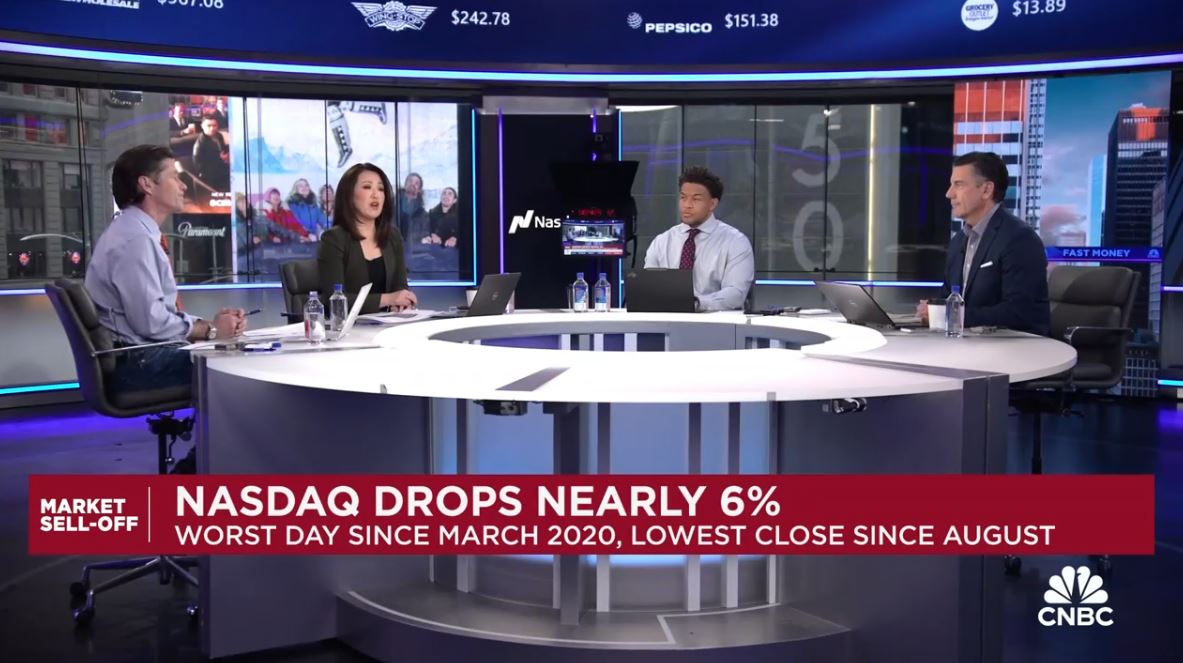
Has the trade deficit with Vietnam been keeping anyone up at night?
We're not sure it solved anything.
But Steve, Tim and Mel brought their A game — and an outstanding conversation about tariffs, in general, took place on Thursday's (4/3) Fast Money. (And the lack of resolution on the show was a great indicator of why everyone is kind of uncertain as to what this all means.)
Steve Grasso stated that "there's a $1.2 trillion trade deficit," and Steve asked the group, what do we do about that. "There's no wrong answers," Steve assured.
Tim Seymour said "there could be wrong answers" and asked, "Is the presumption that a deficit is bad."
Steve suggested that Donald Trump merely wants "an equal playing field," citing car tariffs in Europe vs. car tariffs in the U.S.
Mel observed, "What is the goal here ... because we are- a deficit symbolizes a very strong economy, that our citizens can buy a lot of stuff from other people."
Tim said he's all for using "leverage," but "I'm not sure I want to reindustrialize our economy. I'm- I'm not sure also that a trade deficit with Vietnam is something that keeps me up at night."
Tim added, "A trade deficit to me is the sign of prosperity and buying power." Steve said, "We do buy 35% of the world's goods."
Brad Gerstner complains of ‘fake news’ being spread about CRWV (but then insists it didn’t come from CNBC)
Thursday's (4/3) Halftime Report had numerous impressive conversations.
The problem was, there were so many of them, with hardly any commercials, we practically got wiped out just trying to jot it all down.
Late in the show, around Final Trade time, the conversation with Brad Gerstner (which started right after the A block) moved on to Coupang and Coreweave.
Brad acknowledged he was a "large buyer" (Judge's term) of the latter's IPO. Then Brad complained "there was a lot of, I think, um, uh, you know, fake news about the company heading into the IPO," including being "wholly dependent on Microsoft."
Moments later, Judge said he gets why Brad likes the name but protested, "I think it's a little unfair though to suggest that, you know, questions about the company's debt and questions about potential depreciation of assets and questions about concentrated relationships as you used the words (sic plural) 'fake,' I mean, those are legit questions that need to be asked. Come on."
"I knew that was gonna get ya," Brad said. "Poor choice of words Scott. Um, you know, I think there were reasonable questions and, and, and, and good stuff asked about the company, um, I just saw a lot of stuff that was, shall I say, ill-informed, in terms of the depreciation schedule, et cetera. So, um, uh, but listen, the questions I heard you and Faber and others asking on CNBC, I think those are totally fair questions."
Brad says commentary by Fed’s Philip Jefferson is ‘ridiculous’
Steve Liesman on Thursday's (4/3) Halftime Report delivered breaking news on Fed vice chair Philip Jefferson, who apparently said, according to Steve, "current policy is well-positioned to deal with risks and the uncertainties out there. There is no need, he says, to hurry and make further policy adjustments."
Steve decided there was "nothing really huge here from Jefferson on the backside of these tariffs from yesterday."
But Brad Gerstner, whose interview with Judge was interrupted for this news, stated, "That comment- I love Steve; that commentary out of Jefferson is ridiculous. The guy's lookin' in the rear-view mirror, not through the windshield."
Brad said, "The Fed will find itself behind the curve, just like they were behind the curve in the summer of 2021." Brad's "certain" that there's "some alarm bells going off at the Fed today."
Brad asserted, "Look at the betting markets today -- the risk of recession is exploding."
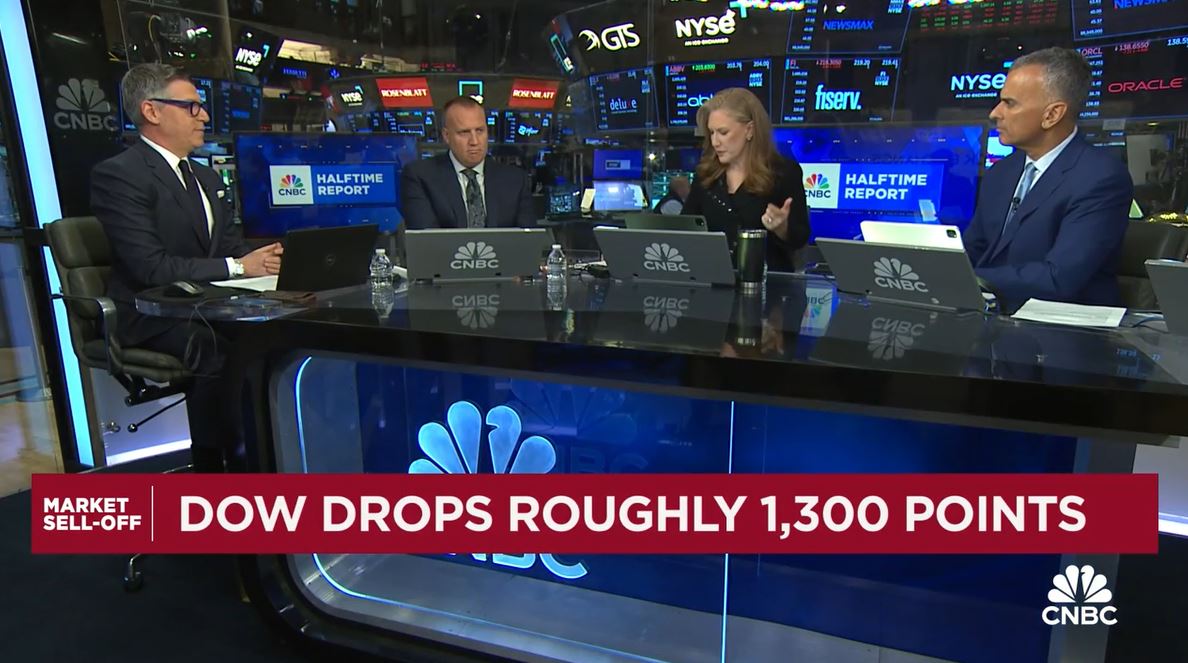
Jenny says people who thought they ‘missed out’ last year on big returns should be happy with how well they’re doing this year
Thursday's (4/3) Halftime Report included an interesting portfolio assessment by Jenny Harrington.
Jenny tried to make the argument that "most people's portfolios are already positioned" for what happened this week.
Jenny said she was "really upset" last year about getting "I missed out" calls from clients. She said that happened because most people are "balanced" in "strategies like what Ritholtz manages." (Translation: Jenny's sick of hearing from people wondering why she won't invest in tech stocks and has been warning for 15 years running that they're overpriced.)
Jenny added, "So last year's pain with respect to relative underperformance, is this year's gain with re- respect to relative outperformance."
"I don't think so," Judge countered. "I do not think that most portfolios with all due respect are positioned for what we got yesterday. I do not."
"I think they are," Jenny insisted.
"I do not," Judge said.
The mention of "Ritholtz" (Barry) natrually brought in Josh Brown, who explained that Monday night, they informed their 4,000 client households that Ritholtz's "Goaltender" strategy, "it's proprietary, it's in-house," was making a "tactical shift" from "100% U.S. large-cap equity, which had been its positioning since October of 2023 to 60% T-bills, um, and 40% U.S. large-cap equity. ... We use that strategy so that our core models don't have to change."
Josh said those core models include international, tech, utilities. "It's behavioral," Josh said.
We're not really sure what Goaltender has to do with how Ritholtz clients are doing this week, but whatever.
‘This is probably the worst it’s going to get’
Judge on Thursday's (4/3) Halftime Report aired clips of Donald Trump touting tariffs since the 1990s as evidence that those tariffs are not "going to zero" anytime soon.
Joe Terranova said "anyone's guessing" as to what "degree" tariffs are negotiated.
Jenny Harrington though opined, "I think that we can probably say, that with respect to tariffs ... this is probably the worst it's going to get."
Josh Brown pointed to BRK-B and NFLX as companies doing OK Thursday, NFLX even green while Brown spoke.
Joe said he's personally buying the TLT and bonds.
Judge brought up that Josh bought Otis while many stocks were "taking an elevator down today." Josh said, "You're the best in the biz, Judge!"
Joe mentioned buying AMZN at 194 and, "I'm wondering if I bought the wrong Mag 7," that "maybe the right Mag 7 to buy is Microsoft."
Joe: ‘Earnings recession’ is a possibility
Judge in the intro to Thursday's (4/3) Halftime Report helpfully told viewers what was "front and center" (um, who knows, maybe some folks didn't actually know).
Josh Brown said that 2 weeks ago on a Thursday, he said, "we're basically in a bear market" ... Josh said what's "different" about why this announcement isn't a "clearing event" is because "it's not a market event."
Josh said that when we get the outlook from CEOs, "The forward guidance is almost gonna be like a 'Saturday Night Live' skit."
As for Wednesday's announcement, "It's not a clearing event," Brown reiterated, along with "bear market."
Judge said Krinsky thinks we might be getting near "real capitulation signals" but doesn't think "we're done with the correction broadly." Joe Terranova said we don't have the "visibility" to make forecasts on "universal conviction" about the market bottom.
Joe said an "earnings recession" is a "real potential (sic redundant) possibility."
Brad: Group of 10 CEOs all think ‘this is a huge mistake’
Brad Gerstner joined Thursday's (4/3) Halftime Report after the A Block and observed that March 26, 2020, was "when we troughed" from COVID. "Ironically (sic incorrect use of 'ironically,' meant 'coincidentally'), the last 35 days, the Nasdaq is down over 10%, which is the same as it was down in that period of time."
"We've been very negatively positioned," Brad said, in fact the most ever for Altimeter over the last 30 days, he said.
Brad said what we got on tariffs was "even bigger than the high end that Peter Navarro, um, and Howard Lutnick had been, uh, you know, conditioning the market to expect."
Brad said he talked with "probably 10 CEOs" overnight and "to a one, they think this is a huge mistake. They think this is too much" and that tariffs will have "lasting and cascading negative, uh, uh, repercussions."
Had Weiss been there, he would’ve noted that robotaxis need humans to get the vehicles serviced and that the robotaxi companies will have to pay for insurance
Judge on Thursday's (4/3) Halftime Report dialed back a bit to the past in his chat with Brad Gerstner, stating he remembered his conversation with Brad on election night in which Brad said, according to Judge, "GDP incredibly strong, the fastest-growing economy in the world, the most innovative economy in the world, our national advantage has never been greater. We see the 10-year backing up, why, because the market is saying 'We think the economy is gonna grow faster than we thought before. And if Trump gets elected, we think those tax cuts will provide further stimulus, so we're not gonna need as many rate cuts. So I think the backdrop looks incredibly constructive."
Judge twice said that was "5 months" ago. Brad explained, "We took down our exposure at the end of January and early February."
On tariffs, Brad said "fair trade" would mean "bilateral negotiations with our partners." Brad said this is a "self-inflicted wound" or "own goal" from the administration.
Judge noted that Brad added NVDA. Brad gave a speech and then noted semiconductors are on the "list of exceptions."
Judge noted that when out in San Francisco, Brad told CNBC "exclusively" that he sold UBER and bought TSLA. Brad said he wasn't "big" into either name and explained how he bought a Model S in December; "it drives me everywhere ... I don't touch the steering wheel." Brad said robotaxis are coming, and "I think this does pose a risk, fundamentally, to the Uber business model."
Josh Brown cut in as the show was getting late and argued that "the consumer wants the lowest price and the fastest pickup when they summon any ride-hailing situation (sic)" and noted what UBER and TSLA stocks have done this year. Brad said "that's a very fair point" and said he sold UBER close to 80.
In the morning on Money Movers, Wilbur Ross (who was once a figure in the tariff storm) predicted "a transfer of wealth and income from Asia to Latin America."
TSLA ‘permanent damage’:
Weiss says yes, Bill says no
Squeezed in among the AMZN-TikTok reports on Wednesday's (4/2) Halftime Report was a conversation about Musk-DOGE, frankly one of the show's best discussions in months, as Bill Baruch argued that there isn't permanent damage to TSLA, Steve Weiss argued that there is, and Dan Ives sounded somewhere in the middle.
Judge mentioned reports of Elon Musk leaving DOGE soon. Dan Ives dialed in and said, "I think clock struck midnight for Musk."
Dan asserted that when Musk leaves DOGE, "This stops Tesla over time from becoming a political symbol," which, according to Dan, has "been a hundred-dollar, at least, overhang on the stock."
Dan said "there's definitely some permanent damage" to TSLA from DOGE, but given the company's potential, Dan views it as a "dark chapter relative to Tesla."
Bill Baruch said this is the "right time" for Musk to exit the White House, but Joe Terranova said he's not sure how TSLA sentiment "reverses." Joe pointed out that this administration isn't into EVs like the last one, so "this might be ceremonial more than anything else."
Steve Weiss asserted "the brand damage here is permanent" and "there are many other options outside the U.S." in EVs. Weiss pointed out that "Budweiser still hasn't recovered ... from their, you know, basically flawed advertising."
That's an interesting point. It seems like 2 different problems. The beer space in general (check out the stocks) has really slumped. But we do think there's some kind of overhang on Budweiser.
Bill insisted that TSLA has important "data" and that "I don't think there's permanent damage here." Weiss said, "We'll disagree on that."
Weiss says TikTok isn’t one of AMZN’s ‘vanity projects’
Wednesday's (4/2) Halftime Report delved into reports of AMZN's interest in TikTok.
Steve Weiss said Andy Jassy has "gotten rid of all the vanity projects from Jeff Bezos, who was a great CEO." But Weiss thinks Amazon's TikTok interest is "not just a throwaway vanity project."
Weiss suggested any impact on META is "inconsequential" and already priced into the stock because people assume TikTok is going to remain in the U.S.
Bill Baruch said AMZN is "well-positioned" to make TikTok a success; he later made the stock his Final Trade.
The AMZN-TikTok report actually brought David Faber to Post 9 (actually he was surely already there earlier in the day) for Halftime; David did not have a scoop but said he's hearing that there may be a TikTok announcement on Wednesday. He told Weiss that another 90-day extension of the TikTok saga would seem possible.
Weiss referred to "Eric and Donny Jr."
Rob Sechan said the Mag 7 companies are competing with each other for assets "in this space" and that if AMZN gets a TikTok deal, it would be an "incremental (snicker) positive."
Bill: Bears are ‘a little offsides’ (a/k/a ‘heightened degree of uncertainty’)
Joe Terranova wondered at the top of Wednesday's (4/2) Halftime Report, "I just don't understand how anyone can have such universal conviction in either direction. I literally (sic) think we're setting up for a pillow fight between bulls and bears."
Joe said his exposure to equities is "not in technology; it's not in the Mag 7."
On tariffs, etc., Rob Sechan said the potential "upside" from the announcement is only "probably a rebound to recent highs."
Bill Baruch though suggested the auto tariff announcement last week "helped flush things down" and "I think people are becoming a little offsides in, in not pricing for upside."
Steve Weiss said he doesn't think the market is "really oversold here," even if there's typically a relief rally, but even if there is a relief rally, "you do have the impact of inflation."
As for stock updates, Bill sold ALAB, CDE, MBLY and MPC. As for CDE, Bill said gold is "likely to pull back a bit."
Joe added to TLT.
Judge said Stifel reiterated a buy on NOW but cut the price target. Judge got the panel to say in unison "all at once" that there's a "heightened degree of uncertainty."
Joe said NTRS can have the "pause that refreshes" though Wolfe cut the target.
Rob still likes CMA even though Raymond James cut the price target.
Judge offered a quarterly report on panelist holdings; Bill's top name is T. Rob's biggest winner was BABA.
Dan Nathan suggests NMAX trading is great for SpinCo
On Tuesday's (4/1) Fast Money, the gang took up the extraordinary rise of NewsMax stock.
Dan Nathan decided the trading activity in NMAX was a positive for America's favorite business channel, stating, "This is great for the parent spinoff of CNBC and MSNBC, SpinCo, because if you're gonna value things like that, my mom told me if you have nothing good to say, don't say anything."
But Dan suggested, if he were Chris Ruddy, "I'd make a bid for SpinCo right now ... I'd use my stock."
Karen Finerman said of NMAX, "It's insane!" and "similar to DJT."
Mel said, "Genius that they only sold it to retail."
Stephanie Link says the ‘tariff thing’ is so overdone
Forever Bull Stephanie Link, who basically thinks this is Morning in America, declared early on Tuesday's (4/1) Halftime Report, "By the way, I think people are so overdone on this tariff thing. I mean, I think we're absolutely pricing in universal tariffs of 20%. You get anything less than that tomorrow, I do think it's a clearing event."
Link also said, "I've been right in terms of, the- the consumer has held up remarkably well."
Link said she's at 1% in cash: "I just see opportunities in stocks all over the place."
Judge said, "Tom Lee has this view that it's gonna be a clearing event, that it's gonna be Liberation Day all right — uh for the uncertainty. That that's gonna be liberated, if, if nothing else."
But Judge said Chris Harvey sees "no liberation from the uncertainty."
Jim Lebenthal offered, "It could be a clearing event," but nobody should take that for granted. "But I do believe that it probably will be a clearing event."
Jim also said that if the rhetoric continues, economic numbers will worsen. But if we "finish with the tariffs" (snicker) (well, actually, right now we're at war with Canada, Denmark and the Venezuelan Tren gang, and tariffs are part of that, and we're getting tired of Ukraine-Russia, but at some point we'll move on to the wall and Justice Department and boosting the stock market) and move on to things companies want, like cutting corporate tax rates, they'll feel better about "retaining and even expanding their work force."
Josh Brown, who was the least enthusiastic of the 3 panelists, contended that "it's about more than just the tariffs," and he doesn't know how it's "possible" that we're "done" with them tomorrow, because "then we have to live with them."
Josh said "the 10-year is saying, 'Don't believe in this clearing-event narrative." Josh noted airline stocks have been "absolutely crushed."
Josh had opened with an observation about "deeply oversold pockets all over the market." But, "I think something technically is broken here."
He added, "The consumer has to hold up. A lot of economists are now pointing to a deterioration in the consumer metrics."
CLF hits 52-week low
Judge on Tuesday's (4/1) Halftime Report said Ed Yardeni lowered his target, again, from 6,400 to 6,000 this time.
Judge wondered about LYV's reax to Monday's ticket scalping executive order and told Josh Brown that "I guess the (sic) Wall Street doesn't really think it's a, a big issue."
Josh said "that would be backwards," as scalpers are "the bane of Ticketmaster's existence."
Stephanie Link trimmed CRWD ("up like 90% in the name") to put dollars into PANW. Josh said he doesn't "disagree" on PANW, but Josh is a "best of breed guy."
Stephanie also bought META after apparently selling it a long time ago. "I made a lot of money. I was buyin' it in the 90s, right, Scott. I sold it at 350."
Jim Lebenthal was surprised to find how low Alphabet's multiple is, stating "17.6 is overdone by a lot."
Josh conceded RDDT got "absolutely hammered in Q1" after previously skyrocketing. It's great that he admits it got clobbered, but what happened to this tailwind of 20 years of gibberish that all the AI models want to read ...